In the current study, more than 3,500 adults (mostly non-Hispanic white) over age 60 were randomly assigned to take a daily multivitamin supplement or placebo for three years. At the end of each year, participants performed a series of online cognitive assessments at home designed to test memory function of the hippocampus, an area of the brain that is affected by normal aging. The COSMOS-Web study is part of a large clinical trial led by Brigham & Women’s Hospital and Harvard called the COcoa Supplement and Multivitamin Outcomes Study (COSMOS).
By the end of the first year, memory improved for people taking a daily multivitamin, compared with those taking a placebo. The researchers estimate the improvement, which was sustained over the three-year study period, was equivalent to about three years of age-related memory decline. The effect was more pronounced in participants with underlying cardiovascular disease.
Columbia University Irving Medical Center. “Multivitamin improves memory in older adults, study finds.” ScienceDaily. http://www.sciencedaily.com/releases/2023/05/230524181916.htm (accessed May 25, 2023).
older age
Quotes for Today – 05.19.23
“A master in the art of living draws no sharp distinction between his work and his play; his labor and his leisure; his mind and his body; his education and his recreation. He hardly knows which is which. He simply pursues his vision of excellence through whatever he is doing, and leaves others to determine whether he is working or playing. To himself, he always appears to be doing both.”
Lawrence Pearsall Jacks, educator and Unitarian minister.
“I love playing, it’s just part of me now, and it was then, at 13. I had the dream to play drums, and I ended up being that person, and I’m still that person.
Ringo Starr – 82 years young
Like I said, I think (I am) Flunking Retirement
Bobi Just Had His 31st Birthday
Remember Bobi? Meet Bobi, the World’s Oldest Dog
Bobi had a birthday.
Bobi eats only human food.
Bobi, who only eats human food, has far exceeded the usual 12-14 year life expectancy of his breed, Rafeiro do Alentejos.
Owners of ‘the world’s oldest dog’ Bobi reveal secret to his long life as he turns 31 — https://www.express.co.uk/news/world/1770113/owners-world-s-oldest-dog-bobi-long-life-dxus
I really want to know exactly what Bobi eats.
Elder Abuse

Most of the time I just delete shit like this. Then, unsurprisingly I get another text.
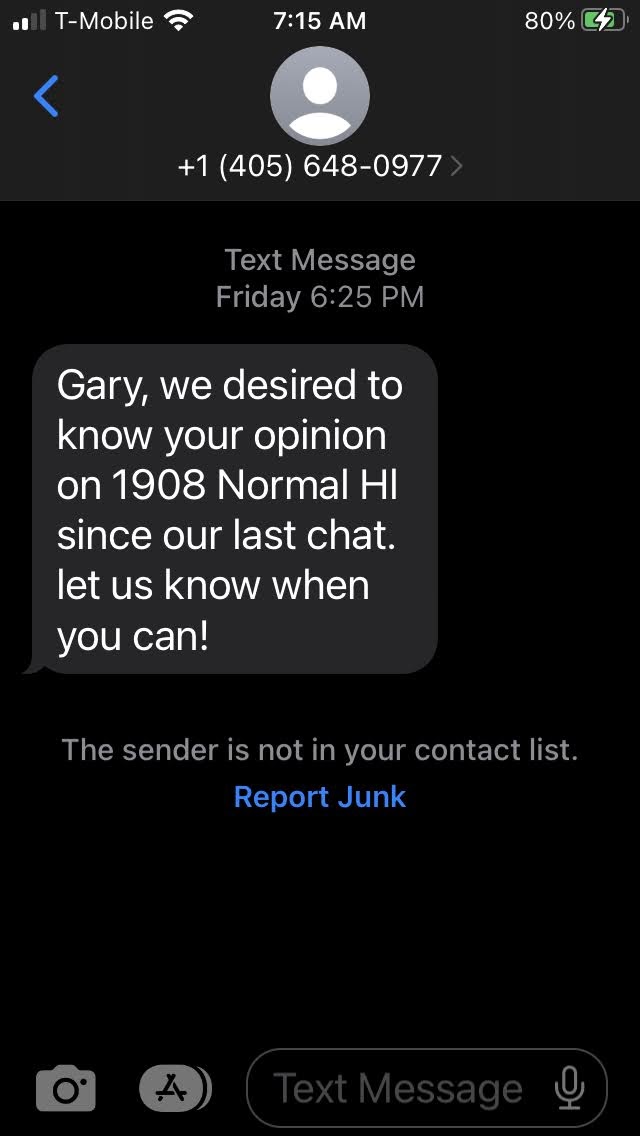
What chat? Why do I feel like I’m being targeted?
HomeVestors, the self-proclaimed “largest homebuyer in the United States,” goes to great lengths to distinguish itself from the hedge funds and YouTube gurus that have taken over large swaths of the real estate investment market. The company says it helps homeowners out of jams — ugly houses and ugly situations — improving lives and communities by taking on properties no one else would buy. Part of that mission is a promise not to take advantage of anyone who doesn’t understand the true value of their home, even as franchisees pursue rock-bottom prices…HomeVestors cautions its franchisees never to take advantage of sellers who are unable to understand negotiations. But by the time he left that evening, Evans had a contract to buy the house for roughly two-thirds its value, signed in Casanova’s shaky script.
The Ugly Truth Behind “We Buy Ugly Houses” — https://www.propublica.org/article/ugly-truth-behind-we-buy-ugly-houses
Full disclosure – I have no clue who sent me these text messages and the source may not be HomeVestors.
Please read then share the entire article. You can’t be too safe nowadays.
The more I think about this form of elder abuse the angrier I get. Then again, maybe I did have a conversation about a different property.

This text message was for a property I don’t own.
(I am) Flunking Retirement
Participants with the most positive views of aging were living, on average, 7.5 years longer than those with the most negative views. 90%: the percentage of centenarians who were functionally independent in their 90’s.
People who live long lives can teach us how to live healthy lives.
Flunking Retirement – https://ysph.yale.edu/about-school-of-public-health/communications-public-relations/publications/public-health-magazine/article/flunking-retirement/
The source article is an interview with two Yale alumni who are still working at the age of 82. Both are youngsters when compared to…Willie who just turned 90 and still working.
Take a Break – 04.19.23 (let’s do some brain remodeling)
A study led by the UNIGE, HES-SO Geneva, and EPFL revealed that music practice and active listening could prevent working memory decline. Such activities promoted brain plasticity, they were associated with grey matter volume increase. Positive impacts have also been measured on working memory. This study was conducted among 132 healthy retirees from 62 to 78 years of age. One of the conditions for participation was that they had not taken any music lessons for more than six months in their lives…The participants were randomly assigned to two groups, regardless of their motivation to play an instrument. The second group had active listening lessons, which focused on instrument recognition and analysis of musical properties in a wide range of musical styles. The classes lasted one hour. Participants in both groups were required to do homework for half an hour a day.”
After six months, we found common effects for both interventions. Neuroimaging revealed an increase in grey matter in four brain regions involved in high-level cognitive functioning in all participants, including cerebellum areas involved in working memory. Their performance increased by 6% and this result was directly correlated to the plasticity of the cerebellum,” says Clara James, last author of the study, a privat-docent at the Faculty of Psychology and Educational Sciences of UNIGE, and full professor at the Geneva School of Health Sciences
Université de Genève. “How music can prevent cognitive decline.” ScienceDaily. http://www.sciencedaily.com/releases/2023/04/230417142520.htm (accessed April 18, 2023).
Journal Reference – Damien Marie, Cécile A.H. Müller, Eckart Altenmüller, Dimitri Van De Ville, Kristin Jünemann, Daniel S. Scholz, Tillmann H.C. Krüger, Florian Worschech, Matthias Kliegel, Christopher Sinke, Clara E. James. Music interventions in 132 healthy older adults enhance cerebellar grey matter and auditory working memory, despite general brain atrophy. Neuroimage: Reports, 2023; 3 (2): 100166 DOI: 10.1016/j.ynirp.2023.100166
I could feel my brain grey matter volume increasing when listening to this album.
People who think positively about aging are more likely to recover memory
A new study has found that older persons with mild cognitive impairment (MCI), a common type of memory loss, were 30% more likely to regain normal cognition if they had taken in positive beliefs about aging from their culture, compared to those who had taken in negative beliefs.
Yale School of Public Health. “People who think positively about aging are more likely to recover memory.” ScienceDaily. http://www.sciencedaily.com/releases/2023/04/230412131116.htm (accessed April 18, 2023).
Journal Reference – Becca R. Levy, Martin D. Slade. Role of Positive Age Beliefs in Recovery From Mild Cognitive Impairment Among Older Persons. JAMA Network Open, 2023; 6 (4): e237707 DOI: 10.1001/jamanetworkopen.2023.7707
I cannot believe how wonderful the aging process is said no one ever.
Sharp Rise in Drug Overdose Deaths in Seniors
The researchers used data from the US Centers for Disease Control and Prevention (CDC) to calculate annual overdose deaths from 2002 to 2021 among people aged 65 and older.
Overall, they found that fatal overdoses quadrupled from 1060 in 2002 (three per 100,000) to 6702 (12 per 100,000) in 2021, with the highest rates in Blacks (30.9 per 100,000).
In 2021, about 13% of overdoses were intentional, 83% were unintentional, 4% were undetermined, and less than 1% were homicide. Older women accounted for 57% of intentional overdoses and 29% of accidental overdoses.
Sharp Rise in Drug Overdose Deaths in Seniors – Medscape – Mar 30, 2023 — https://www.medscape.com/viewarticle/990297?src=rss
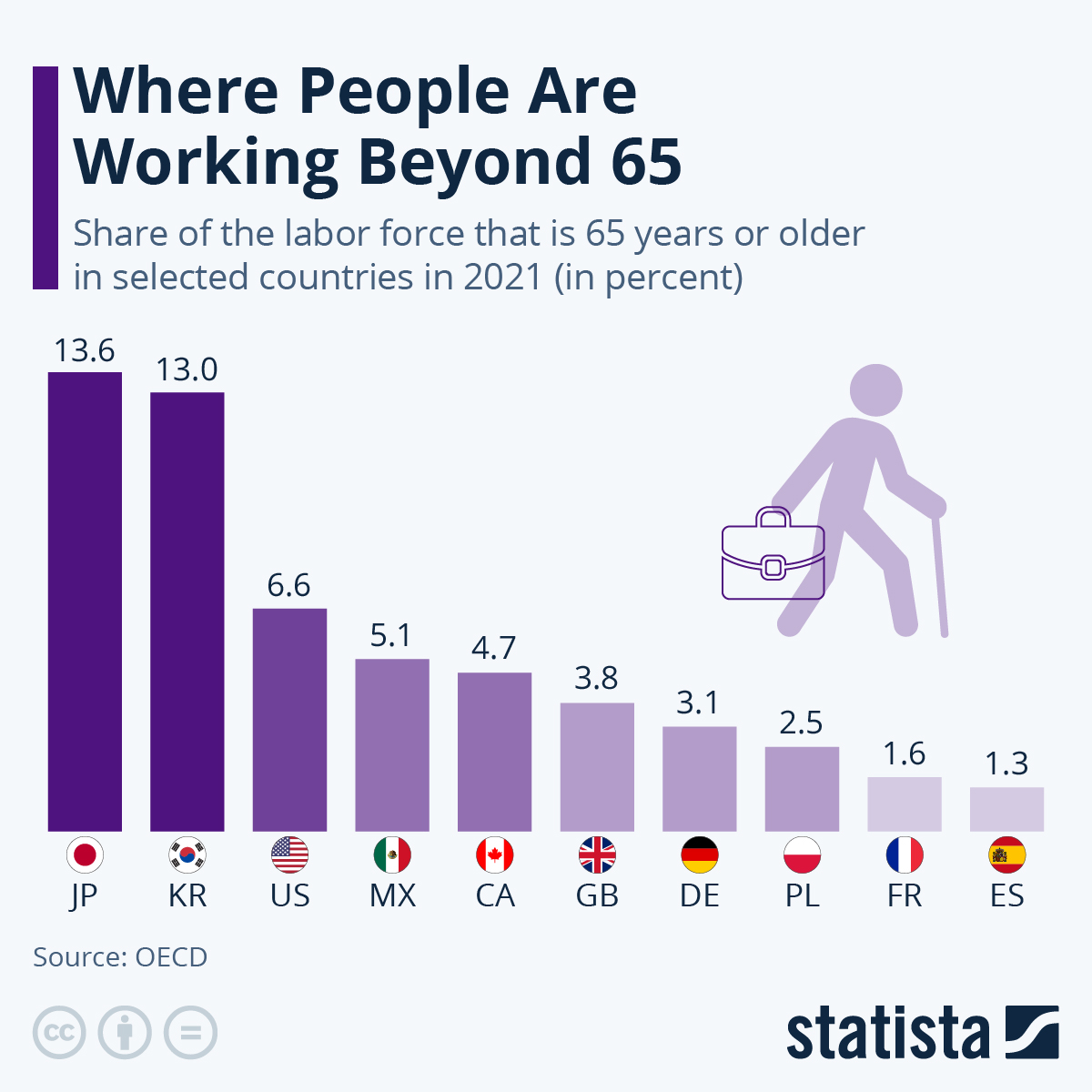
Scary Chart or Not?
Depression and Accelerated Biological Aging
“These patients show evidence of accelerated biological aging, and poor physical and brain health,” which are the main drivers of this association, says Breno Diniz, a UConn School of Medicine geriatric psychiatrist and author of the study, which appears in Nature Mental Health on March 22.
Diniz and colleagues from several other institutions looked at 426 people with late-in-life depression. They measured the levels of proteins associated with aging in each person’s blood. When a cell gets old, it begins to function differently, less efficiently, than a “young” cell. It often produces proteins that promote inflammation or other unhealthy conditions, and those proteins can be measured in the blood. Diniz and the other researchers compared the levels of these proteins with measures of the participants’ physical health, medical problems, brain function, and the severity of their depression.
University of Connecticut. “Depressed, and aging fast: Older adults with late-in-life-depression age biologically older than their chronological peers..” ScienceDaily. http://www.sciencedaily.com/releases/2023/03/230322190947.htm (accessed March 25, 2023).
Journal Reference:
Johanna Seitz-Holland, Benoit H. Mulsant, Charles F. Reynolds III, Daniel M. Blumberger, Jordan F. Karp, Meryl A. Butters, Ana Paula Mendes-Silva, Erica L. Vieira, George Tseng, Eric J. Lenze, Breno S. Diniz. Major depression, physical health and molecular senescence markers abnormalities. Nature Mental Health, 2023; 1 (3): 200 DOI: 10.1038/s44220-023-00033-z


You must be logged in to post a comment.