How To Reduce Your Risk of Developing Diabetes

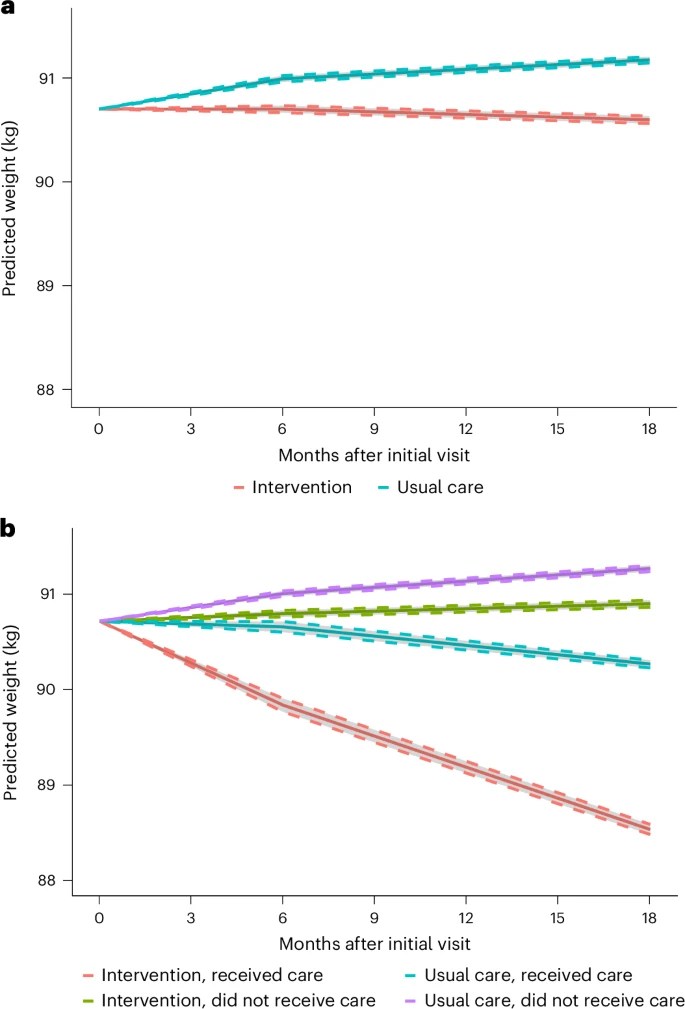
The researchers, from 23 universities in Spain and Harvard Chan School, split 4,746 PREDIMED-Plus participants into an intervention group and a control group and followed their health outcomes for six years. The intervention group adhered to a Mediterranean diet; reduced their caloric intake by about 600 calories per day; engaged in moderate physical activity, such as brisk walking and strength and balance exercises; and received professional support for weight loss control. The control group adhered to a Mediterranean diet without calorie restriction, exercise guidance, or professional support. Participants ranged from age 55 to 75, were overweight or obese, and had metabolic syndrome, but were free of T2D at baseline.

The study found that those in the intervention group had a 31% lower risk of developing T2D compared to those in the control group. Additionally, the intervention group lost an average of 3.3 kilograms and reduced their waist circumference by 3.6 centimeters, compared to 0.6 kilograms and 0.3 centimeters in the control group. Scientists found 3 simple tweaks that cut diabetes risk by 31%https://www.sciencedaily.com/releases/2025/08/250829022835.htm Harvard T.H. Chan School of Public Health. ScienceDaily. http://www.sciencedaily.com/releases/2025/08/250829022835.htm (accessed August 29, 2025).

Guess I’ll cut out beer.

Thinking Styles – What’s Your Style?

Read this thinking style pyramid and refer back to it as often as needed.

This image has an empty alt attribute; its file name is screenshot-2025-04-26-074800.png

We are all suckers for click bait. I started with this:

Older Adults Face Higher Cancer Risk From Alcohol, Even at Low or Moderate Levelshttps://www.medscape.com/viewarticle/older-adults-face-higher-cancer-risk-alcohol-even-low-or-2025a

Scary stuff if you’re an older adult! I should STOP DRINKING ALCOHOL.

But what if this study is wrong? See pyramid above. Sensing bias in the article I took a look at the comments. Dr. Bradley Fawkes’ comment was noteworthy. In the results section of the study you’ll find this:

“While no associations were found for low- or moderate-risk drinking patterns vs occasional drinking among individuals without socioeconomic or health-related risk factors…” Alcohol Consumption Patterns and Mortality Among Older Adults With Health-Related or Socioeconomic Risk Factors – https://jamanetwork.com/journals/jamanetworkopen/fullarticle/2822215

So in the absence of socioeconomic or health-related risk factors no associations were found.

Cheers!

An unexpected event in which an individual comes to rest on the ground, floor, or lower level

A fall is defined as an unexpected event in which an individual comes to rest on the ground, floor, or lower level.1 Falls are a leading global health challenge, ranking as the second cause of death from unintentional injuries.2 Over 80% of these fatalities occur in low-income and middle-income countries, with the highest mortality rates observed among individuals aged 60 years and older.3 WHO emphasises environmental and health-related gaps contributing to fall-related mortality, such as limited access to the health-care system and inadequate infrastructure.2 However, the implementation of fall prevention strategies in low-income countries (LICs) and some middle-income countries (MICs) is often hindered by challenges such as data scarcity, inadequate health-care infrastructure, and limited resources.2 In contrast, several high-income countries (HICs) such as Denmark, Switzerland, and Austria found persistently low or even declining rates of fall-related mortality, despite an ageing population.4 Investigating the underlying factors contributing to these trends in HICs is crucial, as it not only provides valuable insights into effective prevention strategies but also serves as a basis for adapting such approaches to resource-constrained settings like LICs and MICs. – Temporal trends and patterns in mortality from falls across 59 high-income and upper-middle-income countries, 1990–2021, with projections up to 2040: a global time-series analysis and modelling studyhttps://www.thelancet.com/journals/lanhl/article/PIIS2666-7568(24)00198-3/

Second cause of death from unintentional injuries.

Remember this the next time you underwrite a case where the applicant is my age. Yikes.

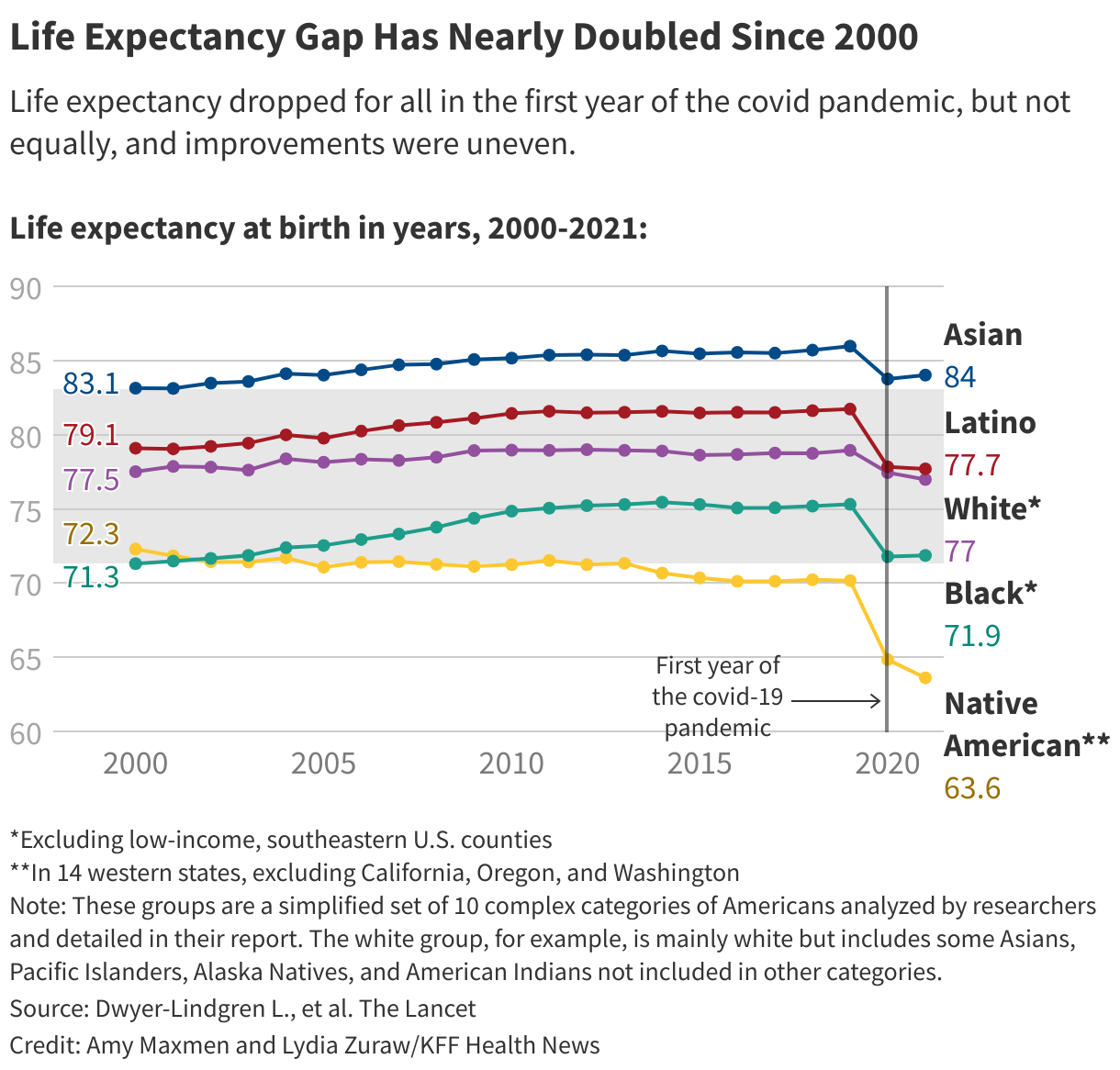
What’s Your America? (there are 10 Americas) – Updated with Scary Charts 02.01.25

Asians and Native Hawaiian or Pacific Islanders definitively outlive other Americans. Is there anything we can learn from them? A confluence of factors may be at play. They tend to have relatively higher socioeconomic status, lower rates of obesity, and the lowest smoking rates of any racial group in the U.S. Healthier traditional cooking may also contribute to their longevity. When it comes to life expectancy, there are 10 Americashttps://bigthink.com/health/ten-americas-for-life-expectancy/

Attention Mortality Risk Experts

Sharpen your pencils and don’t ask me what a pencil is.

Updated 02.01.25 with Scary Charts

The Health of Millennials

The Health of Millennials — https://www.bcbs.com/the-health-of-america/reports/the-health-of-millennials

YIKES!

Social Isolation and Dementia Risk

A study by Huang and colleagues is the first nationally representative cohort study examining the association between social isolation and incident dementia for older adults in community dwelling settings. A cohort of 5,022 older adults participating in the National Health and Aging Trends Study was followed from 2011 to 2020. When adjusting for demographic and health factors, including race, level of education, and number of chronic health conditions, socially isolated adults had a greater risk of developing dementia, compared with adults who were not socially isolated (hazard ratio, 1.27; 95% CI, 1.08 – 1.49). Potential mechanisms to explain this association include the increased risk of cardiovascular disease and depression in older adults who are socially isolated, thereby increasing dementia risk.

Mengru Wang. Geriatrician Advises on Use of Vitamin D Supplementation, Lecanemab, and Social Media for Her Patients – Medscape – Jan 20, 2023 — https://www.medscape.com/viewarticle/987285?src=rss#vp_2

One week ago we had our older adult friends over for dinner. Midweek my wife went out with her friends while I gathered with my friends. Last night was date night and we got out of the house. This evening we’re having dinner at a friend’s house.

Dementia risk reduction activities!

Variation in cardiovascular disease risk factors among older adults in the Hunter Community Study cohort: A comparison of diet quality versus polygenic risk score — Journal of Human Nutrition and Dietetics Notes

The study of Reay and colleagues was an analysis of data from a subset (n=1703) of the Hunter Community Study cohort, comprising 3253 Australian men and women aged 55-85 at recruitment (between 2004 and 2007). Across the cohort there were 138 participants self-reporting that they suffered angina, 176 atrial fibrillation, 689 high cholesterol, 758 hypertension, 129 a heart attack and 164 an arterial bypass surgery. The CVD phenotypes data had a large number of missing data points (only 1678 subjects responding).

…the ARFS (Australian Recommended Food Score) data suggest that dietary quality was poor across the whole cohort. In the absence of a wide distribution of diet quality it is difficult to evaluate the relationship of diet with disease endpoints (i.e. without a lot of participants consuming a healthy diet it is impossible to detect the effects of a healthy diet on lipids and CVD outcomes)

Variation in cardiovascular disease risk factors among older adults in the Hunter Community Study cohort: A comparison of diet quality versus polygenic risk score — Journal of Human Nutrition and Dietetics Notes

Study shortcomings noted. I am still planning on stir fried veggies with brown rice and Thai sauce for dinner tonight despite not knowing my exact CVD genetic risk.

Dinner. (There’s a fried egg hiding on the bottom of the bowl).

Thinking About a Booster Shot?

Waning Immunity after the BNT162b2 Vaccine in Israel – https://www.nejm.org/doi/full/10.1056/NEJMoa2114228?af=R&rss=currentIssue

The graph shows increases in the numbers of daily severe acute respiratory syndrome coronavirus 2 (SARS-CoV-2) infections and new cases of severe coronavirus disease 2019 (Covid-19), on different scales, during the delta variant wave among persons who had received two doses of vaccine.

Waning Immunity after the BNT162b2 Vaccine in Israel – https://www.nejm.org/doi/full/10.1056/NEJMoa2114228?af=R&rss=currentIssue

It may be real nerdy but I like to do my research.