POP !!!
Profits not People
Scary Charts – 09.24.26
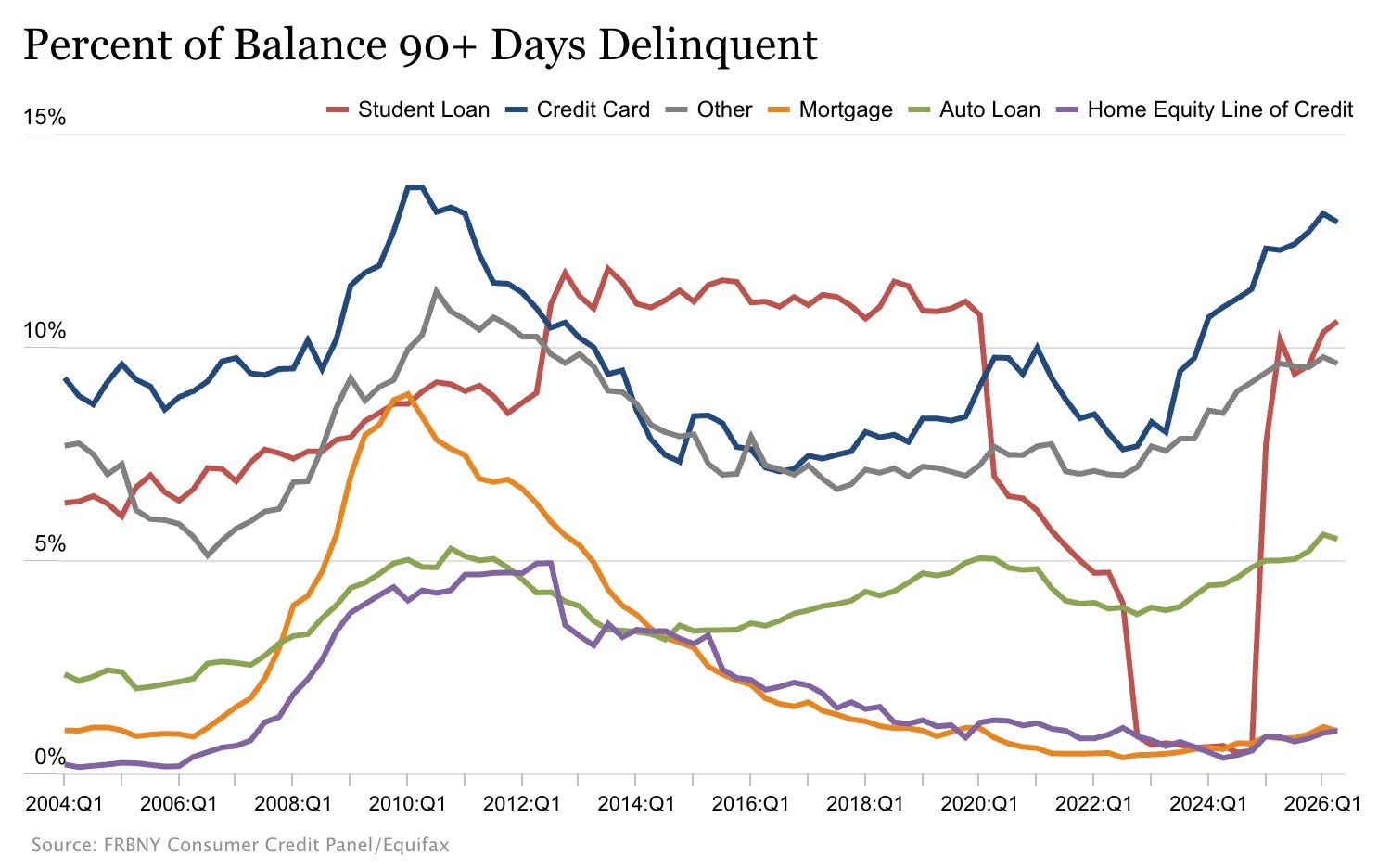
It’s as simple as this: as long-term interest rates continue moving higher, virtually every important piece of financial math gets worse, all at the same time.
The discount rate used to value stocks rises, which makes future earnings worth less today. Mortgages get more expensive. Corporate borrowing gets more expensive. Private equity deals and private credit…much of which is already FUBAR but not showing it yet…become harder to finance. Leveraged companies have to refinance debt at higher rates. Consumers pay more to borrow and the federal government pays more to service its enormous pile of debt.
Yikes.
Scary Pictures – 09.12.26

Source:
The consumer price index rose 3.4% last month compared with a year ago, the Labor Department said Friday, the same as in July. But on a monthly basis, inflation quickened, as costs jumped 0.4% from July to August, up from an increase of just 0.1% the previous month. U.S. inflation accelerated last month as gas prices spiked, squeezing Americans’ finances – https://www.pbs.org/newshour/economy/u-s-inflation-accelerated-last-month-as-gas-prices-spiked-squeezing-americans-finances
Yikes.
Scary Charts – 09.04.26
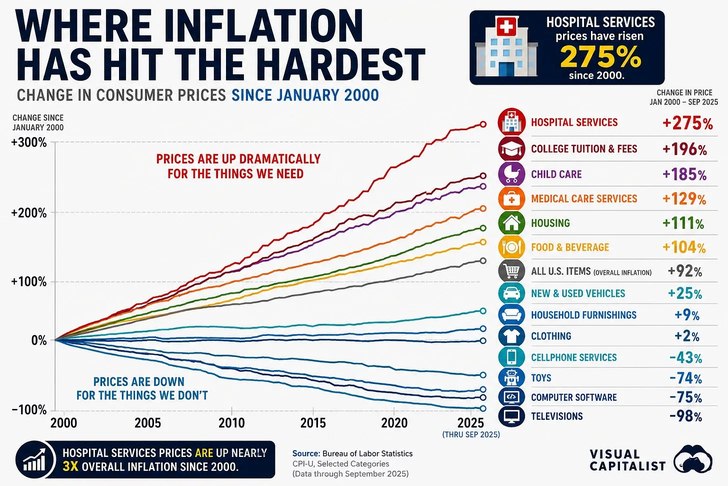
Source: It’s Mostly the Hospital Prices, Stupid
https://rickriley.substack.com/p/its-mostly-the-hospital-prices-stupid
Yikes.
The Data Centers Next Door You Didn’t Know Were There
Until your city loses 3,000,000 gallons of water.
Massive El Reno water leak traced to Bitcoin mining data center facility – https://kfor.com/news/local/massive-el-reno-water-leak-traced-to-bitcoin-mining-data-center-facility/
The culprit – https://athlonbt.com/about-us/
The website went down while I was reading about the company.

Scheduled maintenance? I call bullshit.
Data Centers Can (are) Ruining People’s Lives
As construction began, Newsom says he spoke with Amazon and Clark Construction representatives, who knocked on his door and, as they put up the fencing around the construction site, told him that if he ever had issues to come to them as they’d “make it right.”
“Then I started having problems, lots of problems,” he says. Innumerable dump trucks came down the road and sent dust through the air day after day. Flashing blue lights from security cameras poured into his bedroom all night. The roads became covered in mud. And eventually, that mud made its way into Newsom’s well, he claims.
“A lot of people in this county have what’s called a bored well, which is a shallow surface water well. So when they’re moving this amount of dirt and earth, digging and vibrations—all those microvibrations over time will work that sediment into the water stream, into that well, and flow straight into my water,” he explains.
He adds that a hydrologist he brought in agreed that the work was disturbing the water table. But when he tried to get in touch with the Amazon superintendent who promised to help address issues, he was met with silence.
A Virginia Homeowner Is Suing Amazon Over a Data Center Being Built by His Home—That He Says Is Already Making Life Unbearable https://www.realtor.com/news/trends/virginia-homeowner-suing-amazon-over-data-center-unbearable/

YIKES. And now a word or two from the great 20th century philosopher Willie:
Amen.
Scary Charts (West Coast edition) – 08.01.26
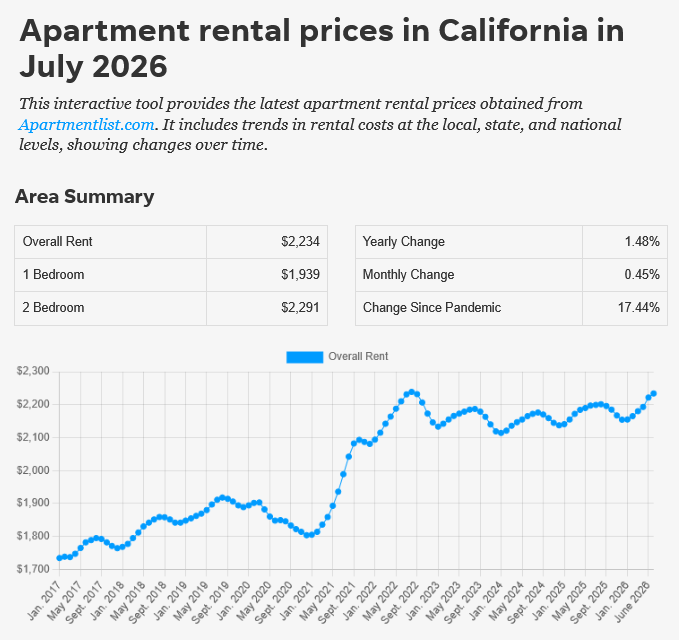
In addition to the $3,250-a-month rent which included a gardener, internet and utilities, remote workers were on the hook for an additional $200 monthly work-from-home fee. The rent was already high. Then came the $200 work-from-home fee – https://www.usatoday.com/story/money/2026/07/30/remote-work-rental-fee-sparks-outrage/91101669007/
Yikes.
This Is Not Your Grandfather’s Weed
So let me be the doctor who says it plainly. This is not the mild plant of the 1970s. Then, cannabis was 1-3% THC. Today’s products run 15-25%, and concentrates — dabs, vapes, wax — hit 70-90%+. When people say “it’s natural, it’s harmless,” they’re defending a product that no longer exists. We didn’t legalize the old plant. We industrialized a far more potent one.
A Danish registry study followed 6,788 people diagnosed with substance-induced psychosis. Overall, 32.2 percent later developed schizophrenia-spectrum or bipolar disorder. Among those with cannabis-induced psychosis, 47.4 percent later received one of those diagnoses.
A large Ontario cohort found that approximately 26 percent of people who presented to an emergency department with cannabis-induced psychosis were diagnosed with a schizophrenia-spectrum disorder within three years. The corresponding rate after alcohol-induced psychosis was approximately 8.9 percent. Among the substances studied, cannabis-induced psychosis carried the highest risk of later transition to schizophrenia-spectrum illness. Is it cannabis-induced psychosis or bipolar disorder? https://kevinmd.com/2026/07/is-it-cannabis-induced-psychosis-or-bipolar-disorder.html
YIKES.
Too Tired to Read Your Kid a Bedtime Story?
Meta is testing an app that uses AI to automate bedtime stories for children. The future is here, folks — and boy, is it depressing.
The app, first caught by 9to5Mac, is called “StoryKit.” (It’s not yet available in the US; Meta confirmed to TechCrunch that it’s currently testing StoryKit in pilot countries.) Per a webpage for the app, parents pick a character either by creating one or taking a “photo of their favorite toy or person to bring them to life,” then describe a setting or world for the story to take place in. They can also ask the story to include a specific lesson or moral, which the app says will allow it to “weave in values like kindness, courage, or empathy without it feeling like a lecture.”
Meta Working on Crushingly Sad AI App That Tells Bedtime Stories to Children, for “Tired” Parents – https://futurism.com/artificial-intelligence/meta-sad-ai-app-stories-children
BULLSHIT!
The Nurse Will See You Now (from the Philippines)
Some U.S. employers use local third-party agencies to hire Filipinos with nursing experience, while others insist on American nursing licenses.But for many virtual healthcare assistants, including telesitters, a degree in any medical field will do. The remote nurses, who usually work the graveyard shift at night from their homes or offices in the Philippines, earn between $5 and $10 per hour, compared to the average pay of more than $45 an hour for registered nurses in the U.S.
The country has grown into a “clinical process outsourcing powerhouse … [and] a premier global hub for supporting over-stressed international healthcare systems,” JL Botor, president of HIMAP, told Rest of World.
U.S. hospitals and clinics can save up to 70% in labor costs by hiring Filipino workers, said Botor, who expects the industry to expand due to the chronic labor shortage, as well as the growing use of AI. Companies will automate easier tasks such as note-taking, and lean more heavily on human oversight for other tasks, he said. He declined to name the U.S. hospitals and clinics that outsource work to the Philippines, citing confidentiality agreements.
Your next nurse may monitor you from the Philippines
https://restofworld.org/2026/u-s-healthcare-philippines-remote-nurses/
Brave New World.


You must be logged in to post a comment.