Professor Emmerson says Queensland’s Metro North Health — Australia’s largest public health service, based in north Brisbane and the surrounding region — is seeing increased presentations of psychosis due to medicinal cannabis.”The Metro North early psychosis service reports 10 per cent of their new presentations — so these are kids aged 16 to 21 — are people who’ve ended up on medicinal cannabis and are becoming psychotic,” the Brisbane-based psychiatrist says.
The investigators found that cannabis use was significantly associated with psychotic disorders during adolescence (adjusted hazard ratio [aHR], 11.2; 95% CI, 4.6 to 27.3), but not during young adulthood (aHR, 1.3; 95% CI, 0.6 to 2.6). Adolescents who used cannabis also had a substantially higher risk for hospitalizations and emergency department visits (aHR, 26.7; 95% CI, 7.7 to 92.8), while there was no substantial risk observed in young adulthood (aHR, 1.8; 95% CI, 0.6 to 5.4). Growing Evidence Supports the Link Between Cannabis Use and Psychosis Risk — https://www.psychiatryadvisor.com/news/cannabis-use-and-psychosis-risk/
The researchers found that people in the high resiliency group were less anxious and depressed, less prone to judge, and had activity in regions of the brain associated with emotional regulation and better cognition compared to the group with low resiliency. “When a stressor happens, often we go to this aroused fight or flight response, and this impairs the breaks in your brain,” Gupta said. “But the highly resilient individuals in the study were found to be better at regulating their emotions, less likely to catastrophize, and keep a level head,” added Desiree Delgadillo, postdoctoral researcher and one of the first authors.
The high resiliency group also had different microbiome activity than the low resiliency group. Namely, the high resiliency group’s microbiomes excreted metabolites and exhibited gene activity associated with low inflammation and a strong and healthy gut barrier. A weak gut barrier, otherwise known as a leaky gut, is caused by inflammation and impairs the gut barrier’s ability to absorb essential nutrients needed by the body while blocking toxins from entering the gut.
Resilience is the capacity to remain flexible and adaptable while facing life’s challenges. It is a complex concept involving traits, environmental factors, and a learned capacity that comes from experience. https://positivepsychology.com/what-is-resilience/
Epidemiologic research suggests that cannabis use may be a significant risk factor for psychotic disorders. A meta-analysis of longitudinal studies estimated that lifetime cannabis users had an odds ratio of 2.58 (95% CI 1.08–6.13) for psychotic disorders compared to non-users (Moore et al., Reference Moore, Zammit, Lingford-Hughes, Barnes, Jones, Burke and Lewis2007). Another meta-analysis found an odds ratio of 3.90 (95% CI 2.84–5.34) for psychotic disorders among the most frequent cannabis users compared to non-users, suggesting dose–response (Marconi, Di Forti, Lewis, Murray, & Vassos, Reference Marconi, Di Forti, Lewis, Murray and Vassos2016). Whether cannabis use is causally related to psychotic disorders continues to be debated, with recent genetic studies raising uncertainty about the directionality of the relationship and the magnitude of association (Ganesh & D’Souza, Reference Ganesh and D’Souza2022; Gillespie & Kendler, Reference Gillespie and Kendler2021).
This study provides new evidence of a strong but age-dependent association between cannabis use and risk of psychotic disorder, consistent with the neurodevelopmental theory that adolescence is a vulnerable time to use cannabis. The strength of association during adolescence was notably greater than in previous studies, possibly reflecting the recent rise in cannabis potency. Age-dependent association of cannabis use with risk of psychotic disorderPsychological Medicine , First View , pp. 1 – 11 https://doi.org/10.1017/S0033291724000990
In The Anxious Generation: How the Great Rewiring of Childhood Is Causing an Epidemic of Mental Illness, social psychologist and author Jonathan Haidt lays out his argument that smartphones and social media are the key driver of the decline in youth mental health seen in many countries since the early 2010s.
The early 2010s were crucial, Haidt argues, because that was when smartphones really began to transform childhood into something unrecognizable. In June 2010, Apple introduced its first front-facing camera, and a few months later Instagram launched on the App Store. For Haidt, this was a fateful combination. Children were suddenly always online, always on display, and connected in ways that were often detrimental to their well-being. The result was a “tidal wave” of anxiety, depression, and self-harm, mostly affecting young girls.In Haidt’s telling, though, smartphones are only part of the problem. He thinks that children in the West are prevented from developing healthily thanks to a culture of “safetyism” that keeps children indoors, shelters them from risks, and replaces rough-and-tumble free play with adult-directed organized sports or—even worse—video games. For evidence of safetyism in action, Haidt contrasts a picture of a 1970s playground merry-go-round, (“the greatest piece of playground equipment ever invented”) with a modern set of play equipment designed with safety in mind and, thus, giving children less opportunity to learn from risky play.
Next steps? Go back online, find a venture capital backed mental health provider, take a quiz, get a diagnosis that confirms your self-diagnosis, have drugs sent to you in the mail.
Anorexia has one of the highest mortality rates of any psychiatric illness. People with anorexia are 18 times as likely to die from suicide as their peers. Fewer than half of those with anorexia make a full recovery.
Individuals who visited the ER for substance-induced psychosis had a 160% greater risk of developing a schizophrenia spectrum disorder (SSD) compared with the general population, new research shows. Three years after an initial ER visit, 18.5% of those with substance-induced psychosis were diagnosed with an SSD. Cannabis-induced psychosis was associated with the greatest risk.
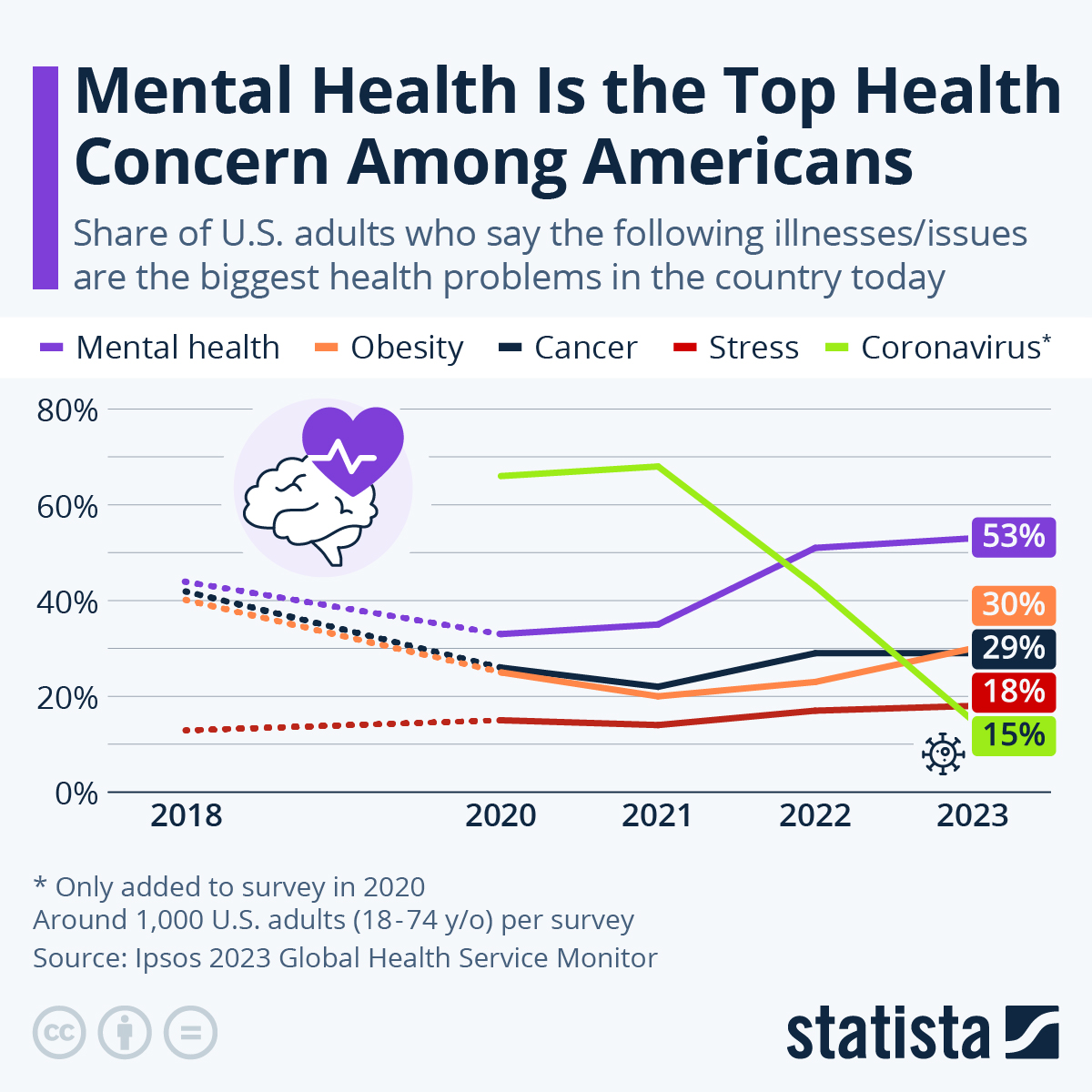
I am profoundly, profoundly concerned about the psychological health of both children and adults in this country.
A culture overemphasizing emotional safety has robbed people of their opportunities for growth. Many people experience these opportunities as a threat, remaining…
Here’s the full post so you don’t have to go to X.
I am profoundly, profoundly concerned about the psychological health of both children and adults in this country. A culture overemphasizing emotional safety has robbed people of their opportunities for growth. Many people experience these opportunities as a threat, remaining permanently infantile, afraid, and unable and unwilling to cope with adversity as a result. Indeed the culture itself rather than encouraging resilience, persuades people that even minor inconveniences are personal affronts and even signs of systemic injustice visited upon them. As people begin experiencing everything that falls outside of their narrow box of predictable experience as a form of threat to be neutralized, not only are they personally deprived of growth opportunities, but they create a culture of mistrust, rigidity, and sterility, which in turn reduces in society as a whole availability of the kinds of messy experiences that are critically important for self-discovery, personal growth, and psychological resilience. The outcome is a society of the over-socialized, of the outraged, of the rule-abiding, of the sterile, and ultimately of the psychologically unwell, of the poorly adapted with scant psychological reserve for problems, crises, or even just interesting experiences that fall outside the norm but which in just days or weeks can provide the equivalent of years of life experience. By protecting everyone, we have destroyed the normal maturation process that is a central to creating psychologically well-functioning adults. The fruits of this are, well, that many young adults are now thoroughly psycho-pathological and unable to deal healthily with the normal stresses of life. I cannot be the only one to observe this and it disturbs me beyond words.
A new study has found that older persons with mild cognitive impairment (MCI), a common type of memory loss, were 30% more likely to regain normal cognition if they had taken in positive beliefs about aging from their culture, compared to those who had taken in negative beliefs.
Journal Reference – Becca R. Levy, Martin D. Slade. Role of Positive Age Beliefs in Recovery From Mild Cognitive Impairment Among Older Persons. JAMA Network Open, 2023; 6 (4): e237707 DOI: 10.1001/jamanetworkopen.2023.7707
I cannot believe how wonderful the aging process is said no one ever.


 lifeunderwriter.net
You must be logged in to post a comment.