Quotes for Today – 05.19.23

“A master in the art of living draws no sharp distinction between his work and his play; his labor and his leisure; his mind and his body; his education and his recreation. He hardly knows which is which. He simply pursues his vision of excellence through whatever he is doing, and leaves others to determine whether he is working or playing. To himself, he always appears to be doing both.”

Lawrence Pearsall Jacks, educator and Unitarian minister.

“I love playing, it’s just part of me now, and it was then, at 13. I had the dream to play drums, and I ended up being that person, and I’m still that person.

Ringo Starr – 82 years young

Like I said, I think (I am) Flunking Retirement

Elder Abuse

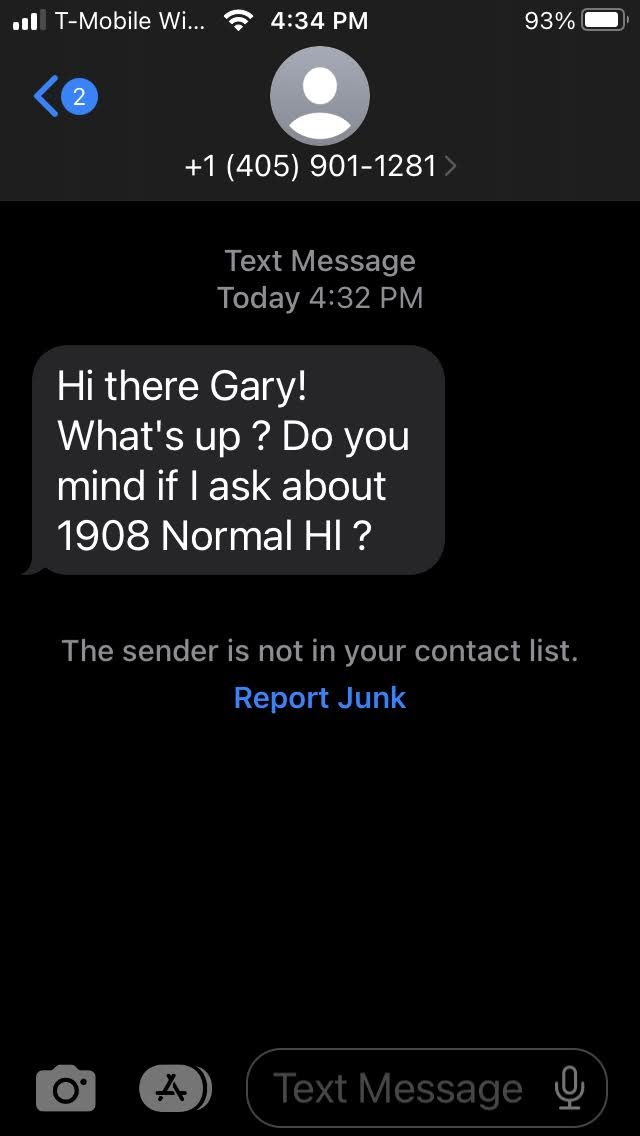
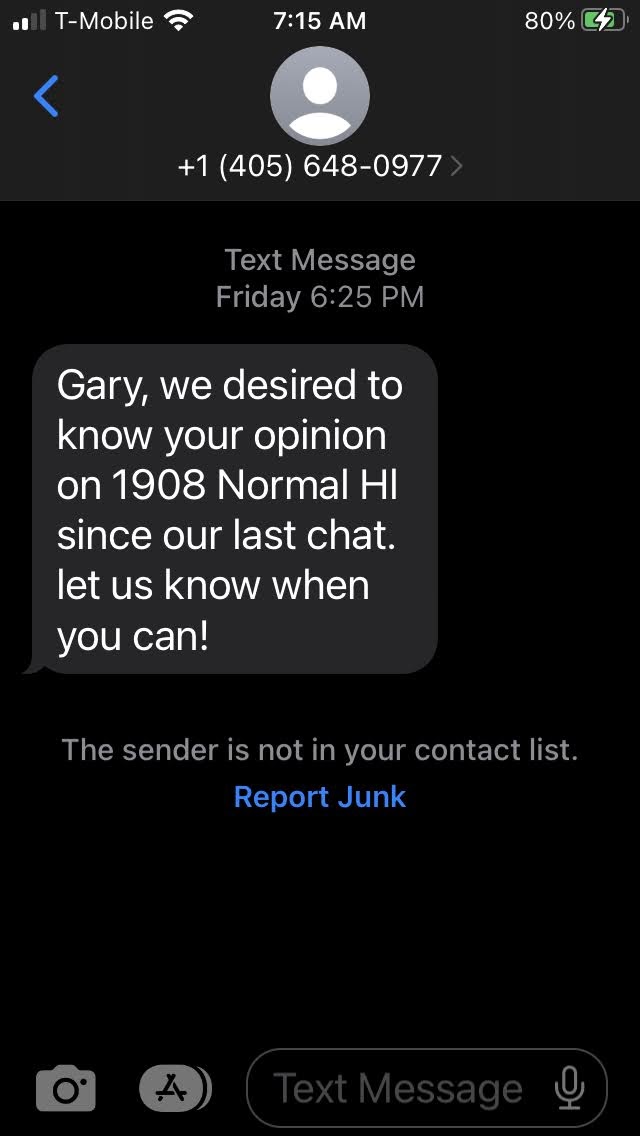
Most of the time I just delete shit like this. Then, unsurprisingly I get another text.

What chat? Why do I feel like I’m being targeted?

HomeVestors, the self-proclaimed “largest homebuyer in the United States,” goes to great lengths to distinguish itself from the hedge funds and YouTube gurus that have taken over large swaths of the real estate investment market. The company says it helps homeowners out of jams — ugly houses and ugly situations — improving lives and communities by taking on properties no one else would buy. Part of that mission is a promise not to take advantage of anyone who doesn’t understand the true value of their home, even as franchisees pursue rock-bottom prices…HomeVestors cautions its franchisees never to take advantage of sellers who are unable to understand negotiations. But by the time he left that evening, Evans had a contract to buy the house for roughly two-thirds its value, signed in Casanova’s shaky script.

The Ugly Truth Behind “We Buy Ugly Houses” — https://www.propublica.org/article/ugly-truth-behind-we-buy-ugly-houses

Full disclosure – I have no clue who sent me these text messages and the source may not be HomeVestors.

Please read then share the entire article. You can’t be too safe nowadays.

The more I think about this form of elder abuse the angrier I get. Then again, maybe I did have a conversation about a different property.

This text message was for a property I don’t own.

(I am) Flunking Retirement

Participants with the most positive views of aging were living, on average, 7.5 years longer than those with the most negative views. 90%: the percentage of centenarians who were functionally independent in their 90’s.

People who live long lives can teach us how to live healthy lives.

Flunking Retirement – https://ysph.yale.edu/about-school-of-public-health/communications-public-relations/publications/public-health-magazine/article/flunking-retirement/

The source article is an interview with two Yale alumni who are still working at the age of 82. Both are youngsters when compared to…Willie who just turned 90 and still working.

Diet Until Proven Otherwise

Plant foods, high in fiber, can reduce the contact of potential carcinogens with cells lining the digestive tract. The fiber causes food to travel faster through a person’s digestive system. This also reduces intestinal cells’ contact with bile acids, which can promote cancer growth. Fruits, vegetables, whole grains, and legumes also provide phytonutrients and antioxidants, which can help repair damaged cells and reduce cancer risk.

Why poor diets are contributing to a surge in colorectal cancer cases among young people — https://www.kevinmd.com/2023/04/why-poor-diets-are-contributing-to-a-surge-in-colorectal-cancer-cases-among-young-people.html

Life is short and science takes too long.

Change your diet. If you have any changes in your bowel habits, talk to your physician.

Take a Break – 04.19.23 (let’s do some brain remodeling)

A study led by the UNIGE, HES-SO Geneva, and EPFL revealed that music practice and active listening could prevent working memory decline. Such activities promoted brain plasticity, they were associated with grey matter volume increase. Positive impacts have also been measured on working memory. This study was conducted among 132 healthy retirees from 62 to 78 years of age. One of the conditions for participation was that they had not taken any music lessons for more than six months in their lives…The participants were randomly assigned to two groups, regardless of their motivation to play an instrument. The second group had active listening lessons, which focused on instrument recognition and analysis of musical properties in a wide range of musical styles. The classes lasted one hour. Participants in both groups were required to do homework for half an hour a day.”

After six months, we found common effects for both interventions. Neuroimaging revealed an increase in grey matter in four brain regions involved in high-level cognitive functioning in all participants, including cerebellum areas involved in working memory. Their performance increased by 6% and this result was directly correlated to the plasticity of the cerebellum,” says Clara James, last author of the study, a privat-docent at the Faculty of Psychology and Educational Sciences of UNIGE, and full professor at the Geneva School of Health Sciences

Université de Genève. “How music can prevent cognitive decline.” ScienceDaily. http://www.sciencedaily.com/releases/2023/04/230417142520.htm (accessed April 18, 2023).

Journal Reference – Damien Marie, Cécile A.H. Müller, Eckart Altenmüller, Dimitri Van De Ville, Kristin Jünemann, Daniel S. Scholz, Tillmann H.C. Krüger, Florian Worschech, Matthias Kliegel, Christopher Sinke, Clara E. James. Music interventions in 132 healthy older adults enhance cerebellar grey matter and auditory working memory, despite general brain atrophy. Neuroimage: Reports, 2023; 3 (2): 100166 DOI: 10.1016/j.ynirp.2023.100166

I could feel my brain grey matter volume increasing when listening to this album.

People who think positively about aging are more likely to recover memory

A new study has found that older persons with mild cognitive impairment (MCI), a common type of memory loss, were 30% more likely to regain normal cognition if they had taken in positive beliefs about aging from their culture, compared to those who had taken in negative beliefs.

Yale School of Public Health. “People who think positively about aging are more likely to recover memory.” ScienceDaily. http://www.sciencedaily.com/releases/2023/04/230412131116.htm (accessed April 18, 2023).

Journal Reference – Becca R. Levy, Martin D. Slade. Role of Positive Age Beliefs in Recovery From Mild Cognitive Impairment Among Older Persons. JAMA Network Open, 2023; 6 (4): e237707 DOI: 10.1001/jamanetworkopen.2023.7707

I cannot believe how wonderful the aging process is said no one ever.

Social Frailty

Social frailty is a corollary to physical frailty, a set of vulnerabilities (including weakness, exhaustion, unintentional weight loss, slowness, and low physical activity) shown to increase the risk of falls, disability, hospitalization, poor surgical outcomes, admission to a nursing home, and earlier death in older adults.

For seniors who want to think about their own social vulnerability, consider this five-item index, developed by researchers in Japan.

(1) Do you go out less frequently now than last year?

(2) Do you sometimes visit your friends?

(3) Do you feel you are helpful to friends or family?

(4) Do you live alone?

(5) Do you talk to someone every day?

Being ‘Socially Frail’ Comes With Health Risks for Older Adults — https://khn.org/news/article/socially-frail-older-adults-health-risks/

I passed the quiz.

New Prescription for the Chronically Ill

Fresh Produce Is an Increasingly Popular Prescription for Chronically Ill Patients

By Carly Graf March 23, 2023

When Mackenzie Sachs, a registered dietitian on the Blackfeet Reservation, in northwestern Montana, sees a patient experiencing high blood pressure, diabetes, or another chronic illness, her first thought isn’t necessarily to recommend medication.

Rather, if the patient doesn’t have easy access to fruit and vegetables, she’ll enroll the person in the FAST Blackfeet produce prescription program. FAST, which stands for Food Access and Sustainability Team, provides vouchers to people who are ill or have insecure food access to reduce their cost for healthy foods. Since 2021, Sachs has recommended a fruit-and-vegetable treatment plan to 84 patients. Increased consumption of vitamins, fiber, and minerals has improved those patients’ health, she said.

“The vouchers help me feel confident that the patients will be able to buy the foods I’m recommending they eat,” she said. “I know other dietitians don’t have that assurance.”

Sachs is one of a growing number of health providers across Montana who now have the option to write a different kind of prescription — not for pills, but for produce.

The Montana Produce Prescription Collaborative, or MTPRx, brings together several nonprofits and health care providers across Montana. Led by the Community Food & Agriculture Coalition, the initiative was recently awarded a federal grant of $500,000 to support Montana produce prescription programs throughout the state over the next three years, with the goal of reaching more than 200 people across 14 counties in the first year.

Participating partners screen patients for chronic health conditions and food access. Eligible patients receive prescriptions in the form of vouchers or coupons for fresh fruits and vegetables that can be redeemed at farmers markets, food banks, and stores. During the winter months, when many farmers markets close, MTPRx partners rely more heavily on stores, food banks, and nonprofit food organizations to get fruits and vegetables to patients.

The irony is that rural areas, where food is often grown, can also be food deserts for their residents. Katie Garfield, a researcher and clinical instructor with Harvard’s Food is Medicine project, said produce prescription programs in rural areas are less likely than others to have reliable access to produce through grocers or other retailers. A report from No Kid Hungry concluded 91% of the counties nationwide whose residents have the most difficulty accessing adequate and nutritious food are rural.

“Diet-related chronic illness is really an epidemic in the United States,” Garfield said. “Those high rates of chronic conditions are associated with huge human and economic costs. The idea of being able to bend the curve of diet-related chronic disease needs to be at the forefront of health care policy right now.”

Produce prescription programs have been around since the 1960s, when Dr. Jack Geiger opened a clinic in Mound Bayou, a small city in the Mississippi Delta. There, Dr. Geiger saw the need for “social medicine” to treat the chronic health conditions he saw, many the result of poverty. He prescribed food to families with malnourished children and paid for it out of the clinic’s pharmacy budget.

A study by the consulting firm DAISA Enterprises identified 108 produce prescription programs in the U.S., all partnered with health care facilities, that launched between 2010 and 2020, with 30% in the Northeast and 28% in the Midwest. Early results show the promise of integrating produce into a clinician-guided treatment plan, but the viability of the approach is less proven in rural communities such as many of those in Montana.

In Montana, 31,000 children do not have consistent access to food, according to the Montana Food Bank Network. Half of the state’s 56 counties are considered food deserts, where low-income residents must travel more than 10 miles to the nearest supermarket — which is one definition the U.S Department of Agriculture uses for low food access in a rural area.

Research shows long travel distances and lack of transportation are significant barriers to accessing healthy food.

“Living in an agriculturally rich community, it’s easy to assume everyone has access,” said Gretchen Boyer, executive director of Land to Hand Montana. The organization works with nearby health care system Logan Health to provide more than 100 people with regular produce allotments.

“Food and nutritional insecurity are rampant everywhere, and if you grow up in generational poverty you probably haven’t had access to fruits and vegetables at a regular rate your whole life,” Boyer said.

More than 9% of Montana adults have Type 2 diabetes and nearly 35% are pre-diabetic, according to Merry Hutton, regional director of community health investment for Providence, a health care provider that operates clinics throughout western Montana and is one of the MTPRx clinical partners.

Brittany Coburn, a family nurse practitioner at Logan Health, sees these conditions often in the population she serves, but she believes produce prescriptions have tremendous capacity to improve patients’ health.

“Real food matters and increasing fruits and veggies can reverse some forms of diabetes, eliminate elevated cholesterol, and impact blood pressure in a positive way,” she said.

Produce prescription programs have the potential to reduce the costs of treating chronic health conditions that overburden the broader health care system.

“If we treat food as part of health care treatment and prevention plans, we are going to get improved outcomes and reduced health care costs,” Garfield said. “If diet is driving health outcomes in the United States, then diet needs to be a centerpiece of health policy moving forward. Otherwise, it’s a missed opportunity.”

The question is, Do food prescription initiatives work? They typically lack the funding needed to foster long-term, sustainable change, and they often fail to track data that shows the relationship between increased produce consumption and improved health, according to a comprehensive survey of over 6,000 studies on such programs.

Data collection is key for MTPRx, and partners and health care providers track how participation in the program influences participants’ essential health indicators such as blood sugar, lipids, and cholesterol, organizers said.

“We really want to see these results and use them to make this more of a norm,” said Bridget McDonald, the MTPRx program director at CFAC. “We want to make the ‘food is medicine’ movement mainstream.”

Sachs acknowledged that “some conditions can’t usually be reversed,” which means some patients may need medication too.

However, MTPRx partners hope to make the case that produce prescriptions should be considered a viable clinical intervention on a larger scale.

“Together, we may be able to advocate for funding and policy change,” Sachs said.

KHN (Kaiser Health News) is a national newsroom that produces in-depth journalism about health issues. Together with Policy Analysis and Polling, KHN is one of the three major operating programs at KFF (Kaiser Family Foundation). KFF is an endowed nonprofit organization providing information on health issues to the nation.

Vitamin D and Dementia


Researchers at the University of Calgary’s Hotchkiss Brain Institute in Canada and the University of Exeter in the UK explored the relationship between vitamin D supplementation and dementia in more than 12,388 participants of the US National Alzheimer’s Coordinating Center, who had a mean age of 71 and were dementia-free when they signed up. Of the group, 37 per cent (4,637) took vitamin D supplements.

In the study, published in Alzheimer’s & Dementia: Diagnosis, Assessment & Disease Monitoring, the team found that taking vitamin D was associated with living dementia-free for longer, and they also found 40 per cent fewer dementia diagnoses in the group who took supplements.

University of Exeter. “Taking vitamin D could help prevent dementia: Taking vitamin D supplements may help ward off dementia, according to a new, large-scale study..” ScienceDaily. http://www.sciencedaily.com/releases/2023/03/230301101511.htm (accessed March 1, 2023) — https://www.sciencedaily.com/releases/2023/03/230301101511.htm

Journal Reference:

Maryam Ghahremani, Eric E. Smith, Hung‐Yu Chen, Byron Creese, Zahra Goodarzi, Zahinoor Ismail. Vitamin D supplementation and incident dementia: Effects of sex, APOE , and baseline cognitive status. Alzheimer’s & Dementia: Diagnosis, Assessment & Disease Monitoring, 2023; 15 (1) DOI: 10.1002/dad2.12404