2/3 Diet and Lifestyle, 1/3 Genetics

What can Okinawans tell us? Why does Ogimi and elsewhere on the island have a history of long life? That comes down to three main factors—diet, social practices, and genetics—explains Craig Willcox, a professor of public health and gerontology at Okinawa International University and a co-principal investigator of the Okinawa Centenarian Study, which has been investigating Okinawan longevity since 1975.“

About two-thirds of longevity is related to diet and way of life, the rest is genetics. Generally speaking, you need the genetic rocket booster if you want to get into the hundreds, not just a good diet,” Willcox says. “We haven’t looked into whether or not Okinawa has a genetic advantage over other parts of Japan, but longevity does run in families here.”

This island unlocked the secret to long life—and knows how to get through tough times — https://www.nationalgeographic.com/travel/article/uncover-the-secrets-of-longevity-in-this-japanese-village

Older Okinawans clinging to the islands’ traditionally healthful diet still boast the longest life expectancy in Japan, the country with the world’s longest-living people. But younger islanders, who grew up coveting the America they peeked at inside the bases here, began gobbling up hamburgers, fried chicken and pizzas as soon as their incomes permitted them to do so.

Urasoe Journal; On U.S. Fast Food, More Okinawans Grow Super-Sized — https://www.nytimes.com/2004/03/30/world/urasoe-journal-on-us-fast-food-more-okinawans-grow-super-sized.html

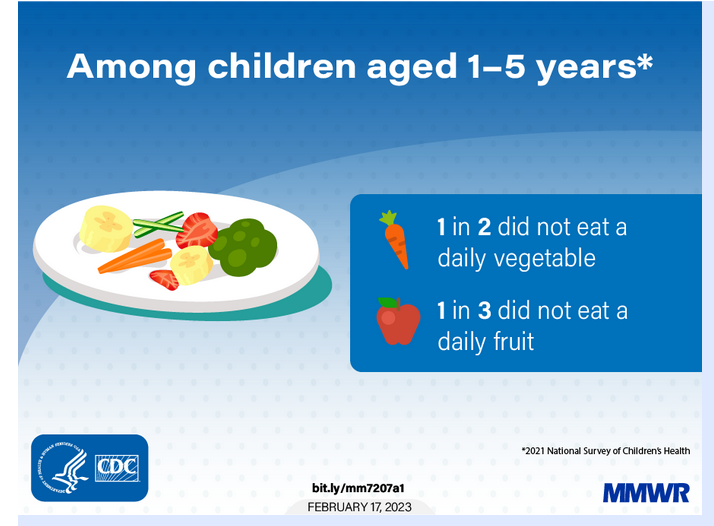
I need to go to the grocery store today.

  • Sweet potatoes
  • Bitter melon
  • Seaweed
  • Fish

Scary Charts – 03.03.23

A study by the World Obesity Foundation predicts that more than half the global population will be living with overweight and obesity within 12 years if prevention, treatment and support do not improve.

Will half the world be overweight? — https://www.healthcare-economist.com/2023/03/03/will-half-the-world-be-overweight/#

Full disclosure – I’ve downloaded the full report but have not yet read it.

Vitamin D and Dementia


Researchers at the University of Calgary’s Hotchkiss Brain Institute in Canada and the University of Exeter in the UK explored the relationship between vitamin D supplementation and dementia in more than 12,388 participants of the US National Alzheimer’s Coordinating Center, who had a mean age of 71 and were dementia-free when they signed up. Of the group, 37 per cent (4,637) took vitamin D supplements.

In the study, published in Alzheimer’s & Dementia: Diagnosis, Assessment & Disease Monitoring, the team found that taking vitamin D was associated with living dementia-free for longer, and they also found 40 per cent fewer dementia diagnoses in the group who took supplements.

University of Exeter. “Taking vitamin D could help prevent dementia: Taking vitamin D supplements may help ward off dementia, according to a new, large-scale study..” ScienceDaily. http://www.sciencedaily.com/releases/2023/03/230301101511.htm (accessed March 1, 2023) — https://www.sciencedaily.com/releases/2023/03/230301101511.htm

Journal Reference:

Maryam Ghahremani, Eric E. Smith, Hung‐Yu Chen, Byron Creese, Zahra Goodarzi, Zahinoor Ismail. Vitamin D supplementation and incident dementia: Effects of sex, APOE , and baseline cognitive status. Alzheimer’s & Dementia: Diagnosis, Assessment & Disease Monitoring, 2023; 15 (1) DOI: 10.1002/dad2.12404

Alcohol Consumption and All-Cause Mortality: A Systematic Review [Internet]

Twenty-five studies compared those who consumed alcohol with never drinkers. Approximately half of the studies reported significant findings that low average alcohol consumption (particularly without binge drinking) was associated with reduced risk of all-cause mortality compared with never drinking alcohol, approximately half of the studies indicated no significant relationship, and two studies reported that low alcohol consumption was significantly associated with greater all-cause mortality compared to never drinking alcohol.

Mayer-Davis E, Leidy H, Mattes R, Naimi T, Novotny R, Schneeman B, Kingshipp BJ, Spill M, Cole NC, Butera G, Terry N, Obbagy J. Alcohol Consumption and All-Cause Mortality: A Systematic Review [Internet]. Alexandria (VA): USDA Nutrition Evidence Systematic Review; 2020 Jul. PMID: 35353467. — https://pubmed.ncbi.nlm.nih.gov/35353467/

I think I’ll have a beer.

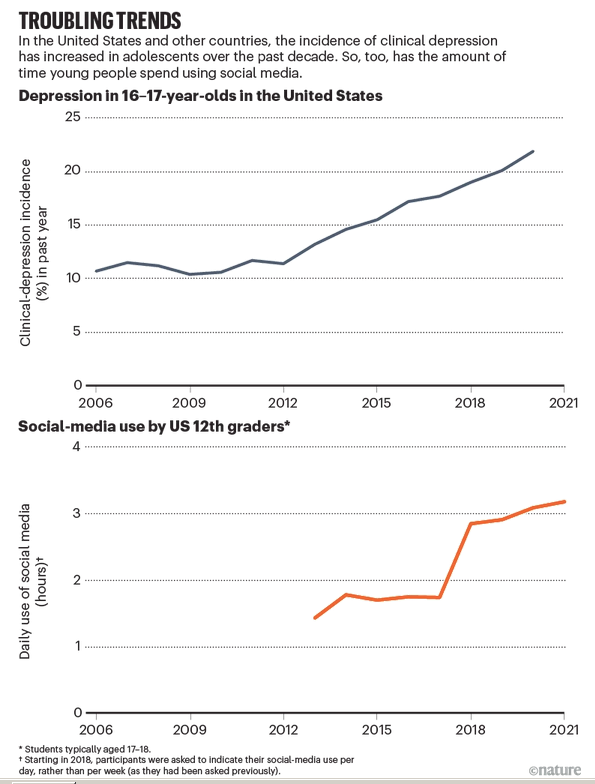
Troubling Trends

Early adolescence is characterized by wide-reaching hormonal changes, as well as physiological changes throughout the body. At the same time, all sorts of neural, cognitive and social shifts are happening. These changes could make social-media environments, such as those provided by Snapchat or TikTok, particularly alluring, but also especially impactful on mental health911. Several developmental-psychology studies have shown, for instance, that adolescents — particularly those in early to mid-adolescence — place increased importance on being able to interact with their peers, and on what their peers think of them12. Other studies suggest that although young children tend to view themselves positively, as they become adolescents, their ideas about themselves come to more closely align with what they perceive others to think of them13,14. Still more work has shown that being rejected or not being included has a greater impact on mood for those in early to mid-adolescence than for people older than 2515.

How social media affects teen mental health: a missing link — Nature 614, 410-412 (2023) — https://www.nature.com/articles/d41586-023-00402-9

I Thought I Told You To Put That Phone Down!

If I have to tell you one more time to Put The Phone Away

Yikes!

Kaiser Permanente $4.5B loss in 2022

Nonprofit hospital and health plan operator Kaiser Permanente on Friday posted a $4.5 billion net loss in 2022, compared to a $8.1 billion net gain in 2021, as the integrated system struggled with billions of dollars in investment losses, a rise in care volume and ongoing labor shortages.

Kaiser’s $4.5B loss in 2022 driven by labor expenses, investment losses — https://www.healthcaredive.com/news/kaiser-reports-13b-operating-loss-2022-driven-by-expenses-inflation/642595/

Yikes.

Meet Bobi, the World’s Oldest Dog

At 30 years and 266 days old, a Portuguese dog named Bobi was crowned the world’s oldest dog ever on February 1, breaking an almost century-old record, per Guinness World Records (GWR). The previous titleholder, an Australian cattle dog named Bluey, was born in 1910 and lived for 29 years and 5 months. 

Meet Bobi, the World’s Oldest Dog — https://www.smithsonianmag.com/smart-news/meet-bobi-the-worlds-oldest-dog-180981601/

See for yourself.

Bobi is 164 years old in human years. See https://www.akc.org/expert-advice/health/how-to-calculate-dog-years-to-human-years/