In Mexico obesity reached epidemic proportions after it joined NAFTA with the United States and Canada in the early 1990s, making processed food more easily available. Diets quickly changed as many people, particularly those on lower incomes, replaced largely healthy traditional staples (corn tortilla, frijoles, Jamaica Water) with highly processed alternatives (hotdogs, nuggets, sodas). Sugar consumption soared and waistlines exploded. In the past 20 years the number of obese and overweight people has tripled, with 75% of the population now overweight.
Mexico also has the sixth highest mortality rate from Covid-19, which has spurred the government to escalate its war against obesity.
Mexico’s War on Obesity Sends Global Junk-Food & Sugary-Drink Giants Scrambling — https://wolfstreet.com/2021/04/13/mexicos-war-on-obesity-sends-global-junk-food-sugary-drink-giants-scrambling/#comments
The Latest in COVID-19 News: Week Ending 04.10.21 – NEJM Journal Watch
Click on the link for the NEJM Journal Watch weekly update. Another good week for SARS-CoV-2 articles. For the second week in a row I did not forget to post this link.
https://www.jwatch.org/fw117693/2021/04/10/latest-covid-19-news-week-ending-apr-10
Meanwhile in B.C. Canada…
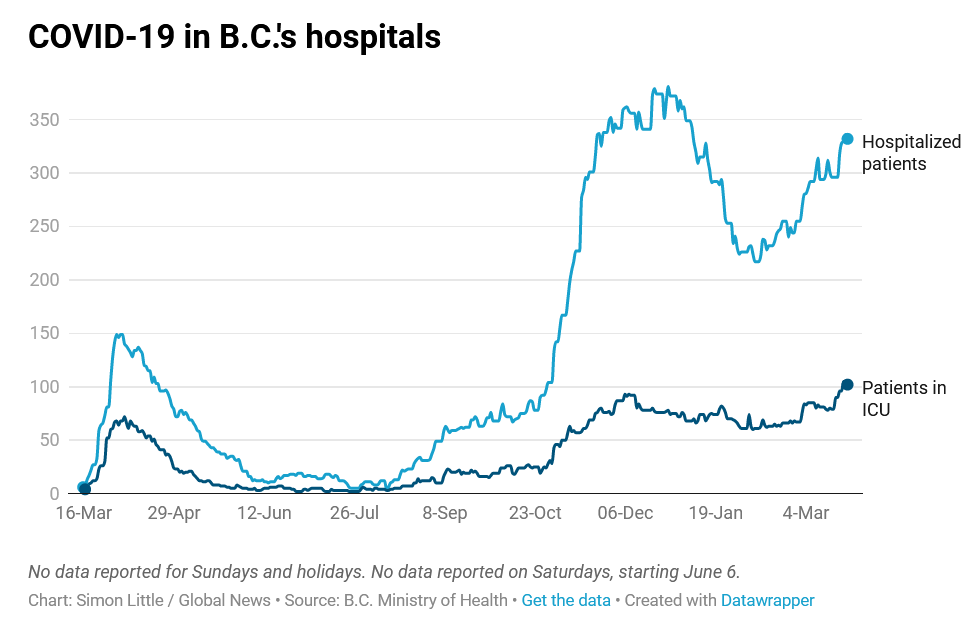
The Real Reason Why Cruise Lines Should Be Allowed to Operate in the Pandemic
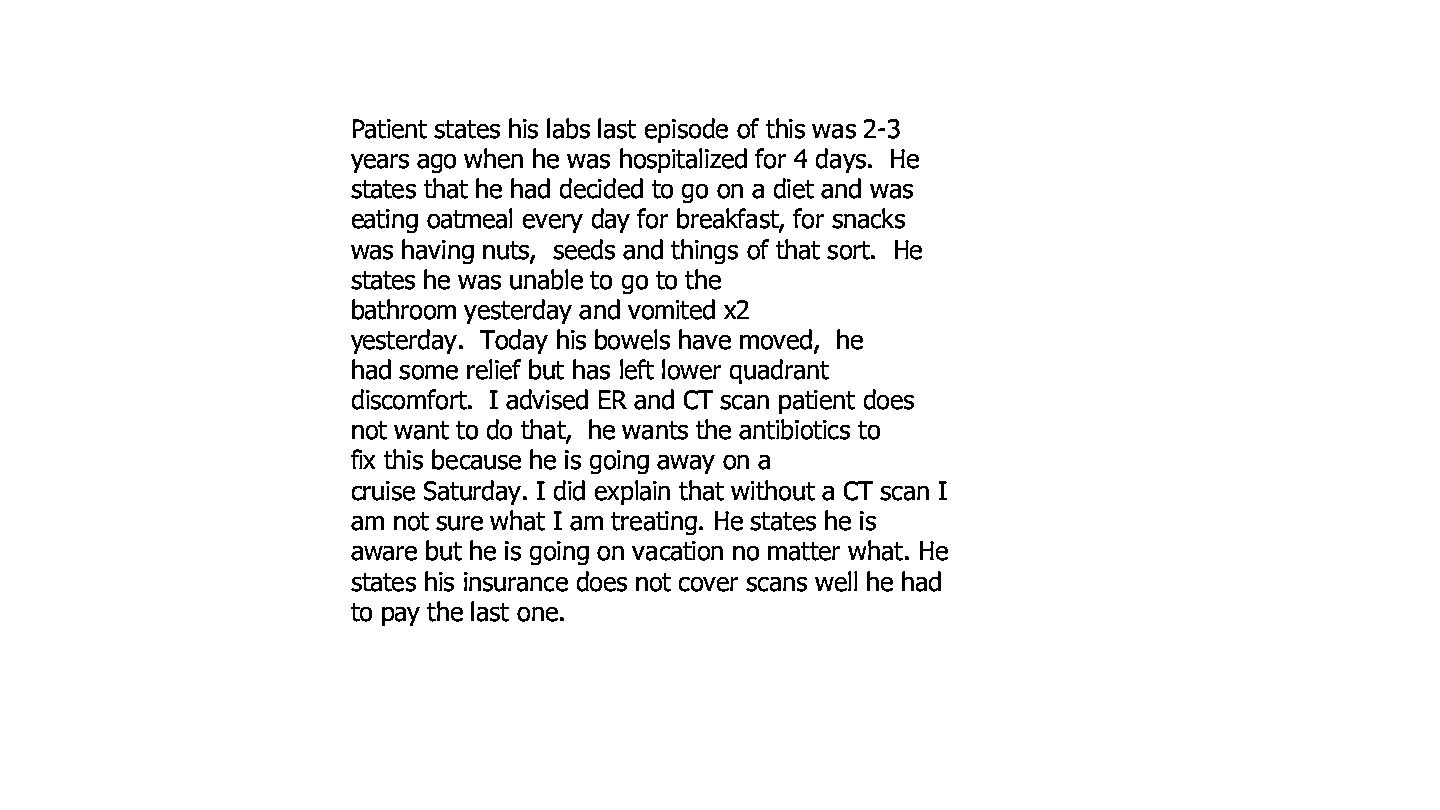
Patient is 60 years of age 5.9 289 with a history of hypertension, obstructive sleep apnea, acid reflux disease, recurrent diverticulitis, and anxiety/depression.
Seriously, you cannot make this stuff up.
COVID-19 Vaccinations by Race/Ethnicity
While the data provide useful insights, they also remain subject to gaps, limitations, and inconsistencies that limit the ability to get a complete picture of who is and who is not getting vaccinated. For example, data gaps and separate reporting of data for vaccinations administered through the Indian Health Service limit the ability to analyze vaccinations among American Indian and Alaska Native people and Native Hawaiian and Other Pacific Islander. Moreover, some states have high shares of vaccinations that are missing race/ethnicity or that are classified as “other,” limiting the ability to interpret the data. For example, in Alaska, over 30% of vaccinations were among people classified as “other” race, and race was unknown for over 30% of vaccinations in Virginia. Four states were not reporting vaccination data by race/ethnicity, including Georgia which halted reporting its data in March. Comprehensive standardized data across states will be vital to monitor and ensure equitable access to and take up of the vaccine.
Latest Data on COVID-19 Vaccinations Race/Ethnicity — https://www.kff.org/coronavirus-covid-19/issue-brief/latest-data-on-covid-19-vaccinations-race-ethnicity/
Meanwhile in Oklahoma…
CVD Remains Leading Cause of Death in Type 2 Diabetes – Medscape
Cardiovascular disease was the leading cause of death among the over 16,000 patients with type 2 diabetes (T2DM) who were enrolled in the SAVOR-TIMI 53 trial.
Two-thirds (66.3%) of all 798 deaths after a median 2.1 years of follow-up were caused by one of five cardiovascular (CV) conditions, with sudden cardiac death accounting for the largest share (30.1%) of the total, Ilaria Cavallari, MD, PhD, and associates said in the Journal of the American College of Cardiology.
It was a pair of laboratory measurements, however, that had the largest subdistribution hazard ratios. “Interestingly, the magnitude of associations of abnormal N-terminal pro–B-type natriuretic peptide [sHR, 2.82] and high-sensitivity troponin T [sHR, 2.46] measured in a stable population were greater than clinical variables in the prediction of all causes of death,” Cavallari and associates said.
CVD Remains Leading Cause of Death in Type 2 Diabetes – Medscape – Apr 06, 2021 — https://www.medscape.com/viewarticle/948849?src=rss
Dumb and Dumber – Noncompliance with Colonoscopy Post Positive FIT
Results Some 88 013 patients who were FIT positive complied with colonoscopy (males: 56.1%; aged 50–59 years: 49.1%) while 23 410 did not (males: 54.6%; aged 50–59 years: 44.9%).
The 10-year cumulative incidence of CRC was 44.7 per 1000 (95% CI, 43.1 to 46.3) among colonoscopy compliers and 54.3 per 1000 (95% CI, 49.9 to 58.7) in non-compliers, while the cumulative mortality for CRC was 6.8 per 1000 (95% CI, 5.9 to 7.6) and 16.0 per 1000 (95% CI, 13.1 to 18.9), respectively. The risk of dying of CRC among non-compliers was 103% higher than among compliers (adjusted HR, 2.03; 95% CI, 1.68 to 2.44).
Conclusion The excess risk of CRC death among those not completing colonoscopy after a positive faecal occult blood test should prompt screening programmes to adopt effective interventions to increase compliance in this high-risk population.
Non-compliance with colonoscopy after a positive faecal immunochemical test doubles the risk of dying from colorectal cancer — https://gut.bmj.com/content/early/2021/03/30/gutjnl-2020-322192?rss=1
Help me understand human behavior. You get a positive FOBT or Cologuard test and your doctor says you need a colonoscopy but you decide not to follow up and follow through with the scope.
SMH.
T cells recognize recent SARS-CoV-2 variants

In their study of recovered COVID-19 patients, the researchers determined that SARS-CoV-2-specific CD8+ T-cell responses remained largely intact and could recognize virtually all mutations in the variants studied. While larger studies are needed, the researchers note that their findings suggest that the T cell response in convalescent individuals, and most likely in vaccinees, are largely not affected by the mutations found in these three variants, and should offer protection against emerging variants.
T cells recognize recent SARS-CoV-2 variants — https://www.nih.gov/news-events/news-releases/t-cells-recognize-recent-sars-cov-2-variants
The Latest in COVID-19 News: Week Ending 04.03.21 – NEJM Journal Watch
Click on the link for the NEJM Journal Watch weekly update. Another very good week for SARS-CoV-2 articles. I forgot about this update until Sunday after numerous cups of coffee.
https://www.jwatch.org/fw117673/2021/04/03/latest-covid-19-news-week-ending-apr-3
Happy Easter from Brazil…
What is driving the second wave in India? — Science Chronicle
Understanding the infectiousness of the double mutant variant becomes all the more important as noncompliance to COVID-19 appropriate behaviour is uniformly poor across India. Yet, the surge in cases is seen only in 19 States, and mainly in about a dozen States. In the absence of timely results of such studies, which will help policy […]
What is driving the second wave in India? — Science Chronicle
Just the use of the phrase “double mutant variant” sends chills up my spinal cord.
Covid-19 and Young Adults – You Are Not Invincible (a gentle reminder)
Whistler recorded 1,120 COVID-19 cases from the beginning of January to March 28, with 218 of them last week alone, driven by the P.1 variant most commonly associated with Brazil. The majority of cases – 83.2 per cent – are in people aged 20 to 39.
Variant that forced B.C. ski resort shut is rapidly spreading, sending more young people to hospital — https://www.theglobeandmail.com/canada/article-covid-19-variant-spreading-rapidly-in-bc/
Young adults age 18 to 34 years hospitalized with COVID-19 experienced substantial rates of adverse outcomes: 21% required intensive care, 10% required mechanical ventilation, and 2.7% died. This in-hospital mortality rate is lower than that reported for older adults with COVID-19, but approximately double that of young adults with acute myocardial infarction.4 Morbid obesity, hypertension, and diabetes were common and associated with greater risks of adverse events. Young adults with more than 1 of these conditions faced risks comparable with those observed in middle-aged adults without them. More than half of these patients requiring hospitalization were Black or Hispanic, consistent with prior findings of disproportionate illness severity in these demographic groups.5,6
Clinical Outcomes in Young US Adults Hospitalized With COVID-19 — https://jamanetwork.com/journals/jamainternalmedicine/fullarticle/2770542
Please get vaccinated as soon as you’re eligible. This is a gentle reminder before I start getting a bit harsher with my messaging.
 lifeunderwriter.net
You must be logged in to post a comment.