Spain – a Squatter’s Paradise

For many people, squatting is a desperate last resort, while for some it is a lifestyle choice or a political statement. Barcelona, which is ground zero of Spain’s squatting phenomenon, attracts squatters from all over Europe. In recent years, more and more young locals — including many with jobs — who have been priced out of the rental market or who simply don’t want to pay the inflated rents have also turned to squatting.

https://wolfstreet.com/2020/09/12/how-spain-became-a-squatters-paradise/

If you live in a part of the world that is blessed with a year round moderate climate this phenomenon is coming to your town.

Meanwhile in Argentina…

In Argentina, they have gone beyond just squatting. Lands with no buildings on them are being occupied, houses build on them and people moves there, sometimes in just a few weeks. Once the illegal houses are occupied getting the people out and the houses destroyed is not easy. That already was a problem before quarantine but during quarantine? It has got a lot worse. And of course there is squatting too.

Reader comment on the arttcle

How Accurate Are Pulse Oximeters Labeled Not For Medical Use? — The Skeptical Cardiologist

I mentioned in my post entitled “Should You Utilize A Home Pulse Oximeter During COVID-19?” that I had purchased a home pulse oximeter and had used it to monitor my oxygen saturation (SpO2) levels during the time I had COVIDesque symptoms recently. Personally, I felt the device was returning accurate information and was helpful in…

How Accurate Are Pulse Oximeters Labeled Not For Medical Use? — The Skeptical Cardiologist

And if you decide not to read Dr. Pearson’s entire article here’s your take home message:

During my illness I would measure my SpO2 twice daily and at times when I felt short of breath. When I felt the worst I noted the SpO2 had dropped to 95%. Within 24 hours it rebounded and I recorded >96% thereafter.

If the SpO2 had progressively dropped and consistently showed values <90% I would have contacted my primary care physician and described the constellation of signs (pulse rate, respiratory rate, BP, and SpO2) and symptoms (shortness of breath, cough, headache, fatigue, etc.) that I had and seek his advice on what to do

https://theskepticalcardiologist.com/2020/09/12/how-accurate-are-pulse-oximeters-labeled-not-for-medical-use/

I encourage all to read the entire article, links provided above.

Thanks for the research Dr. Pearson.

How Dean Vagnozzi’s Clients Lost Bets On The Dead

Since financial adviser Dean Vagnozzi was charged with fraud in a government lawsuit in July, he has been castigated by regulators for how he steered customers to Par Funding, a Philadelphia lender founded by a twice-convicted felon. With his heavy radio advertising and free steak sales dinners, Vagnozzi, 51, touted alternatives to Wall Street.

Source: How Dean Vagnozzi’s Clients Lost Bets On The Dead

Actually the title to the original article is misleading.

Don’t bet on people dying to make your profits. Unfortunately some people do just that.

Life Partners founder Brian Pardo lived well in Waco, Texas, for a time. Pardo bought four planes and a yacht along with such artifacts as replicas of an ancient Egyptian sarcophagus and a pharaoh’s throne. His business eventually sold $2.4 billion in policies to 20,000 investors.

But in 2010 the Wall Street Journal reported that Pardo’s firm was relying heavily on an assembly-line doctor who was systematically under-predicting life expectancies. Life Partners’ sellers were living a lot longer than predicted — very good for them but hard on investors paying years of premiums without collecting death benefits,

https://insurancenewsnet.com/oarticle/how-clients-of-an-advisor-facing-fraud-complaint-lost-bets-on-the-dead?utm_source=feedly&utm_medium=rss&utm_campaign=how-clients-of-an-advisor-facing-fraud-complaint-lost-bets-on-the-dead#

I’ve never been a fan of the life settlement business.

Never accept one of those free steak dinner offers.

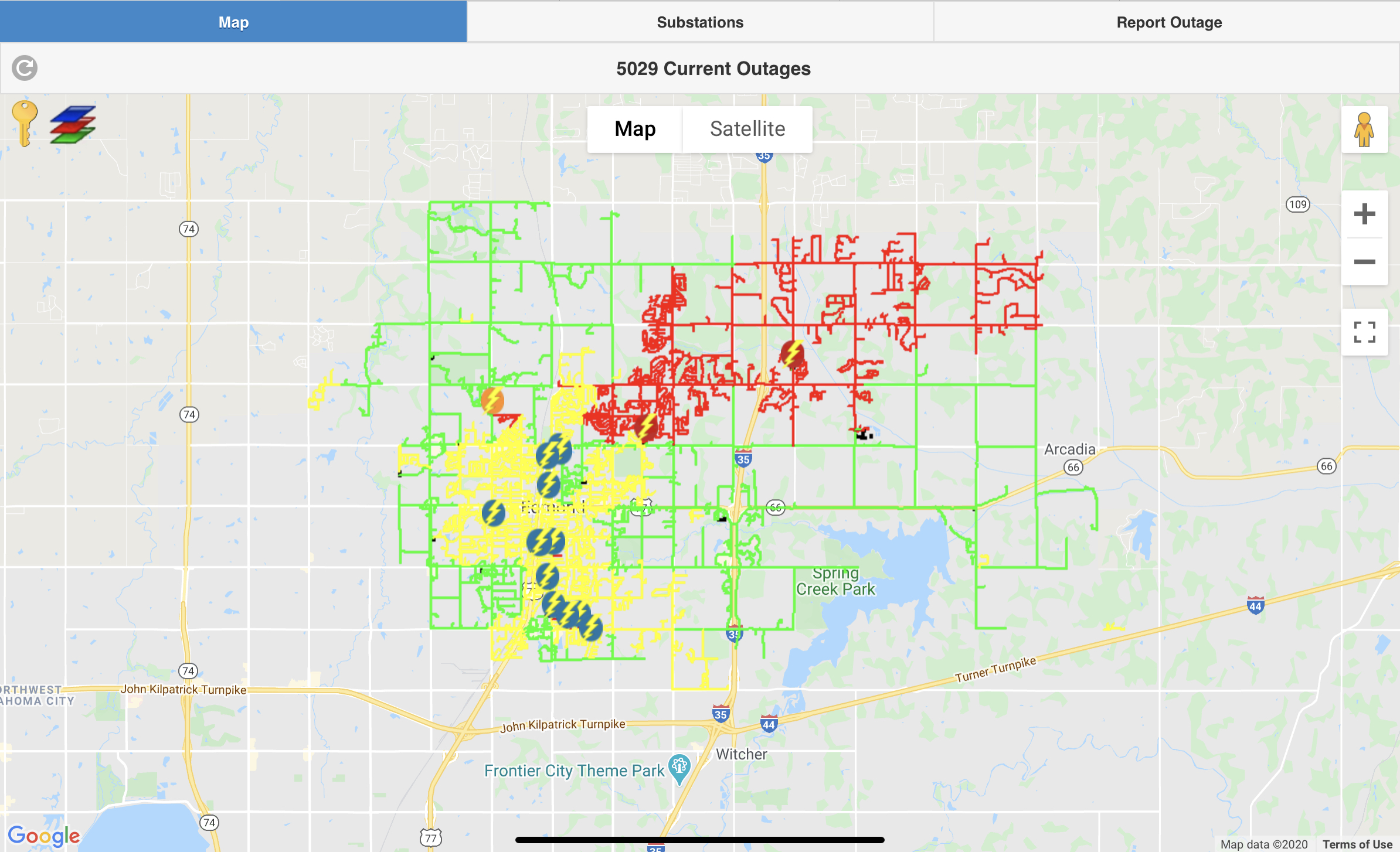
Meanwhile in…Oklahoma jumps to 4th in U.S. for COVID-19 positivity, 9th in new cases

Oklahoma has an 11.3% positivity rate — the percentage of COVID-19 tests that are positive — more than double the country’s positivity rate of 5.2%. The state’s rate is its highest yet, surpassing the 10.1% in the July 26 report to become the second time Oklahoma has landed in the positivity red zone.

Oklahoma’s new case rate is 146 per 100,000 people, nearly two-thirds more than the national average of 88 per 100,000. The state has been in the red zone for new cases for nine consecutive weeks.

A week ago the report warned that virus transmission was increasing in the “major university towns.”

Oklahoma jumps to 4th in U.S. for COVID-19 positivity, 9th in new cases — https://tulsaworld.com/news/state-and-regional/oklahoma-jumps-to-4th-in-u-s-for-covid-19-positivity-9th-in-new-cases/article_e111c7ae-f2ad-11ea-9ed9-2fe10f044c6b.html#tracking-source=home-trending

A majority of young adults in the U.S. live with their parents for the first time since the Great Depression

In July, 52% of young adults resided with one or both of their parents, up from 47% in February, according to a new Pew Research Center analysis of monthly Census Bureau data. The number living with parents grew to 26.6 million, an increase of 2.6 million from February. The number and share of young adults living with their parents grew across the board for all major racial and ethnic groups, men and women, and metropolitan and rural residents, as well as in all four main census regions. Growth was sharpest for the youngest adults (ages 18 to 24) and for White young adults.

A majority of young adults in the U.S. live with their parents for the first time since the Great Depression — https://pewrsr.ch/351SVs1

And to think the number of young people living with their parents was based upon data from July. This percentage will go higher since a lot of kids are moving back home from college earlier than expected.

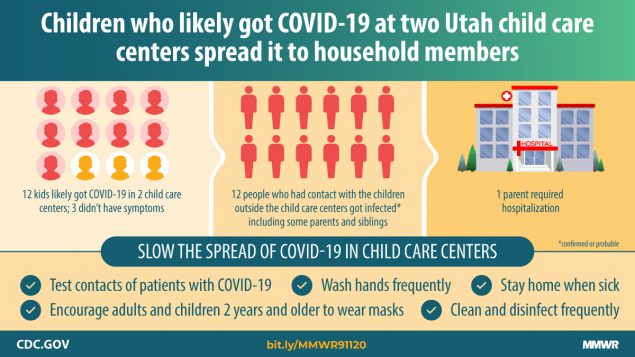
The problem with college during the coronavirus pandemic is not just what’s happening on campuses and in college towns. It’s also that colleges may end up spreading the virus to dozens of other communities. In recent weeks, as students have returned to campus, thousands have become infected. And some colleges have responded by sending students home, including those known to have the virus.

Last week, after hundreds of students came down with the virus, the State University of New York at Oneonta ended in-person classes and sent students home. Colorado College, North Carolina State, James Madison (in Virginia) and Chico State (in California) have taken similar steps. At Illinois State, Georgia Tech and the University of Georgia, administrators have encouraged some students who have tested positive to leave campus, so they don’t infect other students, and return home.

These decisions to scatter students — rather than quarantine them on campus — have led to widespread criticism. “It’s the worst thing you could do,” Dr. Anthony Fauci, the federal government’s leading infectious-disease expert, said on NBC. “When you send them home, particularly when you’re dealing with a university where people come from multiple different locations, you could be seeding the different places with infection.” – Zach Morin, a University of Georgia student, told WXIA, a local television station, “Once it is open and people are there and spreading it, it doesn’t make sense to send it across the nation.” Susan Dynarski, a University of Michigan economist, wrote on Twitter that “unloading students onto home communities” was “deeply unethical.”

There are no easy answers for colleges, because creating on-campus quarantines brings its own challenges. At the University of North Carolina in Chapel Hill, one student who tested positive — Brianna Hayes — said that no employee checked on her during her week in isolation. “Feverish and exhausted from the virus, she made four trips up and down staircases to move her bedding and other belongings to her isolation room,” The Times’s Natasha Singer writes, in a story about campus quarantines.

Still, many experts say that the colleges that chose to reopen their campuses despite the risks, often for financial reasons, have a moral responsibility to do better. “Universities are not taking responsibility for the risks they are creating,” Sarah Cobey, an epidemiologist at the University of Chicago, said.

Last spring, the meatpacking industry became a vector for spreading the disease, when it quickly reopened and caused hundreds of new infections. This fall, higher education may end up being a similar vector.

David Leonhardt – The New York Times The Morning newsletter email 09.09.20

Clusterfuck.

What is the ideal age to retire? Never, according to a neuroscientist — ideas.ted.com


If you want to live a satisfying, long life, neuroscientist Daniel Levitin has some advice for you: Stay busy. What is the ideal age to retire? Never. Even if you’re physically impaired, it’s best to keep working, either in a job or as a volunteer. Lamont Dozier, the co-writer of such iconic songs as “Heat…

via What is the ideal age to retire? Never, according to a neuroscientist — ideas.ted.com


Attention Parents! Read This – Covid-19 GI Symptoms Common in Children

A prospective study of 992 healthy children (median age 10.1 years) of healthcare workers from across the UK found that 68 (6.9%) tested positive for SARS-CoV-2 antibodies.1 Half of the children testing positive reported no symptoms, but for those that did the commonest were fever (21 of 68, 31%); gastrointestinal symptoms, including diarrhoea, vomiting, and abdominal cramps (13 of 68, 19%); and headache (12 of 68, 18%). Latest findings from the Covid-19 Symptom Study app,2 which was launched in late March to track people’s symptoms, also show that gastrointestinal symptoms occur frequently in children with positive swab tests.3

Covid-19: UK studies find gastrointestinal symptoms are common in children — Citation: BMJ 2020;370:m3484 — https://www.bmj.com/content/370/bmj.m3484

“I slept on the floor, and woke up to ants crawling on my bed.”

Gaughan reported the room had dirt on the bed and on the ground, as well as an unclean sink and curtains. When she asked the hall coordinators why the room was in that condition, they said they had not anticipated anyone contracting COVID-19 within the first move-in day, so the rooms were not prepared, and spoke to her with indifference, she said.

Gaughan said she felt uncomfortable when she said she reported she was told she could not tell her parents that she tested positive for COVID-19, as it would cause “unnecessary chaos”. She added that the resident assistant informed her that he was told that none of the individuals herself and her roommate had come into contact with would be quarantined or notified of her testing positive.

‘I felt like a guinea pig’: student’s ‘awful’ quarantine experience prompts UI apology — https://dailyiowan.com/2020/08/20/i-felt-like-a-guinea-pig-students-awful-quarantine-experience-prompts-university-of-iowa-apology/

Colleges and universities are seemingly ill-prepared to deal with Covid-19 outbreaks on campuses. One commentator on this story wrote “they don’t care about students only their institutional survival” which is an opinion I share. Schools had months to prepare for reopening for the fall semester. From the stories I’ve read most institutions get an F in Infectious Diseases 101. Read this entire story yourself. Here are the points I gleaned from this story:

Poor planning from bad assumptions.

Bad assumptions led to poor judgment.

Poor judgment resulted in poor decisions.

Zero contact tracing (don’t tell your parents and we won’t tell anyone you’ve been in contact with).

Apologize because an apology for your ineptitude solves everything.

Apologize (but keep their money). College Clusterfuck 2.0 – “It’s a Dystopian Hell” – Updated.

Oh…I almost forgot. Blame the kids and take no responsibility.

In an email from Assistant Dean and Director of Student Accountability Angela Ibrahim-Olin, the University of Iowa reiterated that students can held accountable for off-campus behavior.

Off-campus behavior may lead to suspensions or cancellations of housing contracts — https://dailyiowan.com/2020/08/25/off-campus-behavior-may-lead-to-suspensions-or-cancellations-of-housing-contracts/