A lot of interesting food for thought.
Link to article – https://www.nakedcapitalism.com/2025/01/the-rise-in-early-onset-cancers-their-origins-and-what-to-do-about-them.html
A lot of interesting food for thought.
Link to article – https://www.nakedcapitalism.com/2025/01/the-rise-in-early-onset-cancers-their-origins-and-what-to-do-about-them.html
According to a study published in BMC Medicine, men who ate the most plant-based foods had a 22 percent reduced risk of colon cancer, compared with those who ate the least. Eating a plant-based diet increases consumption of fiber and antioxidants associated with cancer prevention, while simultaneously avoiding the compounds in animal products linked to cancer risk. It has long been known that people who avoid meat are at reduced risk.
The power of nutrition in cancer prevention — https://www.kevinmd.com/2024/02/the-power-of-nutrition-in-cancer-prevention.html
Also schedule that colonoscopy you’ve been putting off.
In an extensive review, the team found that the early life exposome, which encompasses one’s diet, lifestyle, weight, environmental exposures, and microbiome, has changed substantially in the last several decades. Thus, they hypothesized that factors like the westernized diet and lifestyle may be contributing to the early-onset cancer epidemic…
Possible risk factors for early-onset cancer included alcohol consumption, sleep deprivation, smoking, obesity, and eating foods. Surprisingly, researchers found that while adult sleep duration hasn’t drastically changed over the several decades, children are getting far less sleep today than they were decades ago. Risk factors such as highly-processed foods, sugary beverages, obesity, type 2 diabetes, sedentary lifestyle, and alcohol consumption have all significantly increased since the 1950s, which researchers speculate has accompanied altered microbiome.
Cancers in adults under 50 on the rise globally – https://www.sciencedaily.com/releases/2022/09/220906161454.htm. Brigham and Women’s Hospital. “Cancers in adults under 50 on the rise globally: Researchers identify risks factors and trends behind an increasing incidence of early-onset cancers around the world.” ScienceDaily. (accessed September 7, 2022).
I’ve been cooking a lot this week and decided to give myself a break tonight. Grab a burger maybe some pizza.
Then I read this article.
Maybe I will cook tonight.
I came across this post in my collection of unpublished drafts. I thought I posted this but obviously I didn’t. This article link was intended to be posted before Colorectal Cancer Rates Rising in Ages 50-54. Better late than never, I guess.
More than one quarter of colonoscopies carried out in Americans aged 30 to 49 years reveal some type of neoplasm, and slightly over 6% of these patients have advanced cancer, results of a nationally representative endoscopic registry show.
One Quarter of 30–49-Year-Olds Have Abnormal Colonoscopy Results – Medscape – Jun 07, 2021. — https://www.medscape.com/viewarticle/952536?src=rss#vp_1
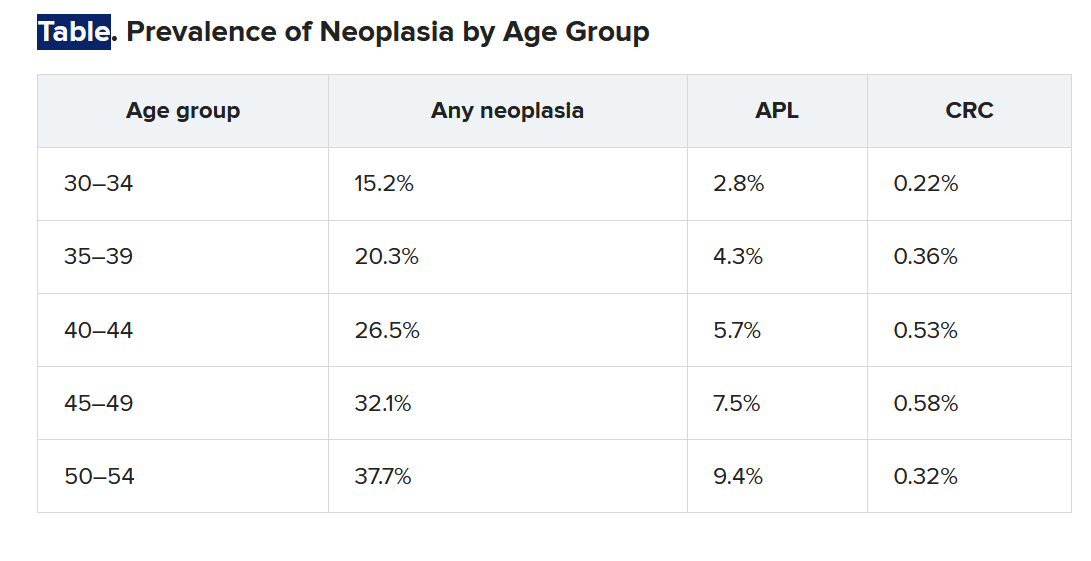
Also see Study Finds Sharp Rise in Colon Cancer and Rectal Cancer Rates Among Young Adults and Diet and Colon Cancer Risk – CBS News.
Conclusions – In this large prospective study, a 10% increase in the proportion of ultra-processed foods in the diet was associated with a significant increase of greater than 10% in risks of overall and breast cancer. Further studies are needed to better understand the relative effect of the various dimensions of processing (nutritional composition, food additives, contact materials, and neoformed contaminants) in these associations.
We categorized all food and drink items of the NutriNet-Santé composition table into one of the four food groups in NOVA, a food classification system based on the extent and purpose of industrial food processing.94243 This study primarily focused on the “ultra-processed foods” NOVA group. This group includes mass produced packaged breads and buns; sweet or savory packaged snacks; industrialized confectionery and desserts; sodas and sweetened drinks; meat balls, poultry and fish nuggets, and other reconstituted meat products transformed with addition of preservatives other than salt (for example, nitrites); instant noodles and soups; frozen or shelf stable ready meals; and other food products made mostly or entirely from sugar, oils and fats, and other substances not commonly used in culinary preparations such as hydrogenated oils, modified starches, and protein isolates. Industrial processes notably include hydrogenation, hydrolysis, extruding, moulding, reshaping, and pre-processing by frying. Flavouring agents, colours, emulsifiers, humectants, non-sugar sweeteners, and other cosmetic additives are often added to these products to imitate sensorial properties of unprocessed or minimally processed foods and their culinary preparations or to disguise undesirable qualities of the final product.
Read the BMJ study here.
Two-week diet swap shows impact on colon cancer risk – CBS News.
They found that only two weeks of diet exchange was enough change the makeup of the intestinal microbiota and affect a number of biomarkers associated with colon cancer risk. The rate of cell turnover in the intestinal lining, levels of fiber fermentation, bacterial metabolic activity, and inflammation all reflected the change in eating patterns.
 lifeunderwriter.net
You must be logged in to post a comment.