Plant Protein Linked to Longer Life

Plant Protein Linked to Longer Life

Link above is to NEJM Journal Watch article.

Conclusions and Relevance  In this large prospective study, higher plant protein intake was associated with lower total and CVD-related mortality. Although animal protein intake was not associated with mortality outcomes, replacement of red meat protein or processed meat protein with plant protein was associated with lower total, cancer-related, and CVD-related mortality.

JAMA Internal Medicine article (Free abstract)

Note: Study focused on Japanese adults.

Plant‐Based Diets Are Associated With a Lower Risk of Incident Cardiovascular Disease, Cardiovascular Disease Mortality, and All‐Cause Mortality in a General Population of Middle‐Aged Adults

Plant‐Based Diets Are Associated With a Lower Risk of Incident Cardiovascular Disease, Cardiovascular Disease Mortality, and All‐Cause Mortality in a General Population of Middle‐Aged Adults

In this community‐based cohort of US adults without cardiovascular disease at baseline, we found that higher adherence to an overall plant‐based diet or a pro-vegetarian diet, diets that are higher in plant foods and lower in animal foods, was associated with a lower risk of incident cardiovascular disease, cardiovascular disease mortality, and all‐cause mortality. Healthy plant‐based diets, which are higher in whole grains, fruits, vegetables, nuts, legumes, tea, and coffee and lower in animal foods, were associated with a lower risk of cardiovascular disease mortality and all‐cause mortality.

Our study is one of the few studies that used data from a general population. Prospective studies of Seventh‐Day Adventists in the United States and Canada found that vegetarians had a lower risk of cardiovascular disease mortality and all‐cause mortality compared with nonvegetarians.4 The EPIC (European Prospective Investigation Into Cancer and Nutrition)‐Oxford study of vegetarians, vegans, and health‐conscious individuals reported that the risk of incident ischemic heart disease and deaths caused by circulatory disease was lower in vegetarians than nonvegetarians.5, 24 However, these findings were not replicated in population‐based studies in Australia and the United States.6, 13 Notably, a prior study that used data from a nationally representative sample administered a brief questionnaire that assessed the frequency with which participants consumed specific types of animal food (red meat, processed meat, poultry, or fish or seafood) to characterize participants’ dietary intakes.6 Such dietary measurement may not have adequately represented dietary patterns on the basis of abundance of plant foods relative to animal foods. The plant‐based diet indexes we used in this study captured a wider spectrum of intake of plant foods and animal foods, leveraging the available dietary data, and allowed us to move away from defining plant‐based diets strictly based on exclusion of animal foods.


Break Free From The Stimulation Nation — Dr. Eric Perry, PhD

At the end of your life, what will have more meaning to you? Will it be the thousands of filtered images you spent “liking” on social media or the real-life moments you spent with loved ones? Realize that every single moment you spend looking at your phone instead of the face of your loved one is a missed opportunity of having a real connection. Your support group in life should consist of the interconnected arms of the real people you know encircling you with love, not the sporadic connectivity of the world wide web.

via Break Free From The Stimulation Nation — Dr. Eric Perry, PhD

Opiods + Marijuana = Bad

Cannabis Plus Opioids in Chronic Pain: Not a Great Combo

Previous research by Humphreys and colleagues showed that people who used medical cannabis also had higher rates of opioid use and misuse. “This is one of many examples where claims about the benefits of medical cannabis are not supported by evidence,” Humphreys told MedPage Today.  The current study had several limitations: it relied on cross-sectional, self-reported data and was subject to possible selection bias and confounding. It also did not assess the frequency or quantity of cannabis or opioid use, or the type of chronic pain.

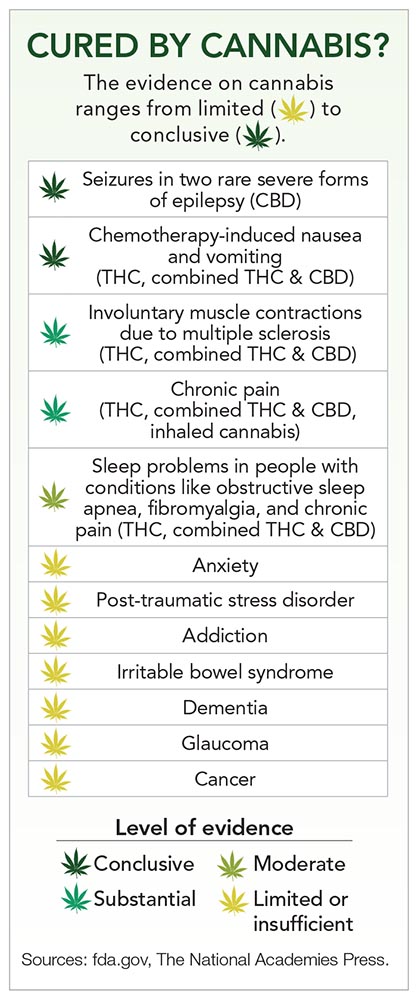
CBD Is Everywhere, but Scientists Still Don’t Know Much About It

This NYT article should be read by anyone considering the use of CBD for anything.

Here’s a list of what CBD can be used for from a local news rack publication.

Relief, the Natural Way

  • Pain
  • Depression
  • Acne
  • Anxiety
  • Cancer
  • Diabetes
  • Drug withdrawals
  • Epilepsy
  • Fibromyalgia
  • Heart health
  • Inflammation
  • Inflammatory bowel disease
  • Insomnia
  • Multiple Sclerosis
  • Neurodegenerative disorders
  • Psoriasis
  • Quitting smoking
  • Quality of life