Incidence of side effect is probably underestimated
Source: RheumNow: Drugs That May Induce Raynaud’s | Medpage Today
Incidence of side effect is probably underestimated
Source: RheumNow: Drugs That May Induce Raynaud’s | Medpage Today
Meldonium is also known as mildronate, it increases exercise capacity in athletes and the Olympic figure skater Ekaterina Bobrova admitted to testing positive to the drug on Monday
Source: What is meldonium and why did Maria Sharapova use it? | Sport | The Guardian
About a third of patients noncompliant; some take other illicit drugs instead
Source: Urine Screens Show Patients Don’t Take ADHD Meds | Medpage Today
In a prospective, community-based study involving more than 10,000 adults followed for a median of 14 years, baseline use of a proton pump inhibitor (PPI) was independently associated with a 20% to 50% higher risk for incident chronic kidney disease (CKD).
Source: PPIs Tied to Increased Risk for Chronic Kidney Disease | Medpage Today
I got heartburn reading this article.
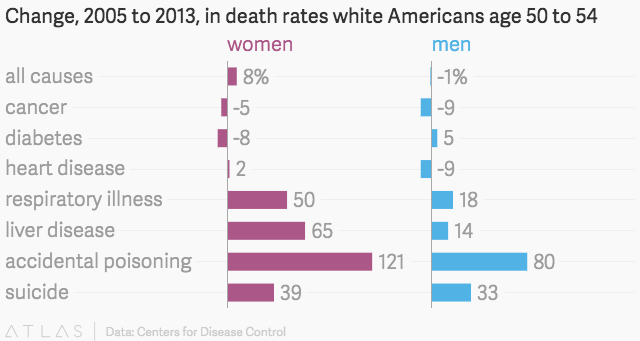
Following a relative plateau around 16,000 deaths per year, prescription opioid overdose deaths shot up 16% in 1 year to 18,893 deaths in 2014, Rose Rudd, MSPH, of the CDC, and colleagues reported in Morbidity & Mortality Weekly Report. Heroin deaths also continued to jump, reaching 10,574 that year, up from about 8,000 in 2013. The latest rate is nearly three times the heroin overdose rate in 2010, the CDC said.
Source: Opioid Overdose Deaths Keep Rising | Medpage Today
Three recent cases of fatal reactions to low-dose oral methotrexate due to interactions and dosing errors highlight the need to improve safety.
Source: 10 Ways to Avoid Fatal Methotrexate Errors | Rheumatology Network
In a registry-based cohort study, Seena Fazel and colleagues test for within-individual associations between SSRI prescription and violent crime.
Source: PLOS Medicine: Selective Serotonin Reuptake Inhibitors and Violent Crime: A Cohort Study
I’ve cut and pasted an email from Health After 50, a free newsletter from Scientific American. My first thought was dig deeper. The uninformed masses might take this information to their physician and start creating demand for these drugs. Would you be surprised that the cost could be as high as $1000.00 per month?
PCSK9 Inhibitors: The Needle, the Cost, the Barriers | Medpage Today
There are still some highly effective generic statins where $10.00 buys you a 90 day supply. There are OTC options to help with muscle pain and cramps. You have to ask what good will these new drugs do if no one can afford them?
God Bless America. We now have PCSK9 (proprotein convertase subtilisin/kexin 9) inhibitors.
The Promising Alternative to Statins
Every so often medication comes along that sends the world of medicine’s collective heart aflutter. Cholesterol-lowering newcomers alirocumab (Praluent) and evolocumab (Repatha) are the current favorites.
Both medications are part of a new class of drugs called PCSK9 inhibitors. As the “inhibitor” in the name implies, these drugs work by inhibiting proprotein convertase subtilisin/kexin 9, a protein that makes it more difficult for the liver to remove cholesterol. By blocking this substance, the medication is able to lower the LDL cholesterol circulating in the blood. In clinical trials, PCSK9 inhibitors have been shown to lower LDL levels significantly beyond what can be achieved with statin drugs, which have been the standard cholesterol-lowering therapy for more than two decades. And they did so without the most common side effect of statins: muscle pain.


You must be logged in to post a comment.