I listened to this and had to play it twice.
Now I want every single one of my guitars back in their cases and stored away in a closet or under the bed.
I never want to play again.
I listened to this and had to play it twice.
Now I want every single one of my guitars back in their cases and stored away in a closet or under the bed.
I never want to play again.
Many thanks to the folks over at http://www.nakedcapitalism.com for the link to this blog post. The post by Erin Bromage highlights much of the same advice I’ve been passing along to family and friends. But coming from this person (bio below) the same advice just feels weightier. After all, I’m just an insurance guy.
READ THIS ARTICLE.
Erin S. Bromage, Ph.D., is an Associate Professor of Biology at the University of Massachusetts Dartmouth. Dr. Bromage graduated from the School of Veterinary and Biomedical Sciences James Cook University, Australia where his research focused on the epidemiology of, and immunity to, infectious disease in animals. His Post-Doctoral training was at the College of William and Mary, Virginia Institute of Marine Science in the Comparative Immunology Laboratory of late Dr. Stephen Kaattari.
Dr. Bromage’s research focuses on the evolution of the immune system, the immunological mechanisms responsible for protection from infectious disease, and the design and use of vaccines to control infectious disease in animals. He also focuses on designing diagnostic tools to detect biological and chemical threats in the environment in real-time.
Dr. Bromage joined the Faculty of the University of Massachusetts Dartmouth in 2007 where he teaches courses in Immunology and Infectious disease, including a course this semester on the Ecology of Infectious Disease which focused on the emerging SARS-CoV2 outbreak in China.
COVID-19 cases among U.S. workers in 115 meat and poultry processing facilities were reported by 19 states. Among approximately 130,000 workers at these facilities, 4,913 cases and 20 deaths occurred. Factors potentially affecting risk for infection include difficulties with workplace physical distancing and hygiene and crowded living and transportation conditions.
COVID-19 Among Workers in Meat and Poultry Processing Facilities ― 19 States, April 2020
Meanwhile in Oklahoma…
116 COVID-19 infections found in pork processing plant in Guymon
The article link is old. I’m unable to find any current data on the number of Covid-19 cases at the meat processing plant.
Like I’ve before, my vegetarian cookbook collection is growing. I’ll need more sources for inspiration in the kitchen when the government starts rationing animal proteins and mandates veganism.
“Unlike other supply chain issues, this has nothing to do with anyone overseas. This has to do with how many people can you make work inside one of these processing plants—they’re all very close to each other and there’s a public health risk,” Rubio said. “So there’s been disruptions there. I know people are working hard to get that resolved. In the meantime, I guess we’ll have to go a little vegan, right?”
Marco Rubio Admits “We Have to Go a Little Vegan” Due to Meat Shortage
Vitamin D Levels Appear to Play Role in COVID-19 Mortality Rates
By analyzing publicly available patient data from around the globe, Backman and his team discovered a strong correlation between vitamin D levels and cytokine storm — a hyperinflammatory condition caused by an overactive immune system — as well as a correlation between vitamin D deficiency and mortality.
The research is available on medRxiv, a preprint server for health sciences.
The role of vitamin D in the prevention of coronavirus disease 2019 infection and mortality
In conclusion, we found significant crude relationships between vitamin D levels and the number COVID-19 cases and especially the mortality caused by this infection. The most vulnerable group of population for COVID-19, the aging population, is also the one that has the most deficit Vitamin D levels.
Vitamin D has already been shown to protect against acute respiratory infections and it was shown to be safe. It should be advisable to perform dedicated studies about vitamin D levels in COVID-19 patients with different degrees of disease severity.
Many years ago I approached my former personal care physician and asked to have my Vitamin D level checked.
“What the hell for?”
“I would like to know my Vitamin D blood level to see if I need to take a supplement.”
“Just get outside in the sun for around 20 minutes a day.”
“Just order the test.”
And he did. Less than a week later Doc called me back to let me know I had Vitamin D deficiency. I’ve been taking a daily supplement since.
Vitamin D deficiency is now recognized as a pandemic. The major cause of vitamin D deficiency is the lack of appreciation that sun exposure in moderation is the major source of vitamin D for most humans. Very few foods naturally contain vitamin D, and foods that are fortified with vitamin D are often inadequate to satisfy either a child’s or an adult’s vitamin D requirement. Vitamin D deficiency causes rickets in children and will precipitate and exacerbate osteopenia, osteoporosis, and fractures in adults. Vitamin D deficiency has been associated with increased risk of common cancers, autoimmune diseases, hypertension, and infectious diseases. A circulating level of 25-hydroxyvitamin D of >75 nmol/L, or 30 ng/mL, is required to maximize vitamin D’s beneficial effects for health. In the absence of adequate sun exposure, at least 800–1000 IU vitamin D3/d may be needed to achieve this in children and adults. Vitamin D2 may be equally effective for maintaining circulating concentrations of 25-hydroxyvitamin D when given in physiologic concentrations.
The American Journal of Clinical Nutrition, Volume 87, Issue 4, April 2008, Pages 1080S–1086S, https://doi.org/10.1093/ajcn/87.4.1080SPublished: 01 April 2008
An interesting hypothesis that needs more research.
Update 05.16.20
Journal Reference:
Journal Reference:
Sammy is 72! Rock on!

A study published in Nature Medicine found that people infected with novel coronavirus (SARS-CoV-2) start shedding the virus two-three days before symptoms show up. Studying 77 pairs of injector-infected pairs, the researchers estimate that 44% of secondary infected people can spread the virus even before symptoms show up. In a study published recently, researchers […]
Since the proportion of pre-symptomatic transmission is substantial, maintaining hand hygiene and social distancing can play an important role in containing virus spread in the community.
via Substantial coronavirus spread seen before symptoms show up — Science Chronicle
“Even in a bad flu season, you never see something like this; it’s just unheard of,” said Harlan Krumholz, MD, a Yale cardiologist…”When they get to the ICU, we are seeing lots of people with acute kidney injuries; lots of people developing endocrine problems; people having blood sugar control issues, coagulation issues, blood clots. We are just waking up to the wide range of ways this virus can affect people. Our ignorance is profound,” but physicians “recognize that this thing has the capability of attacking almost every single organ system, and it may or may not present with respiratory symptoms.”
Read the entire Medscape article at Unusual Presentations of COVID-19
This shit is real and it is scary.
But hey, let’s go to the beach!

Photo credit: as noted in the photo but stolen shamelessly from the Twitter feed #FloridaMorons
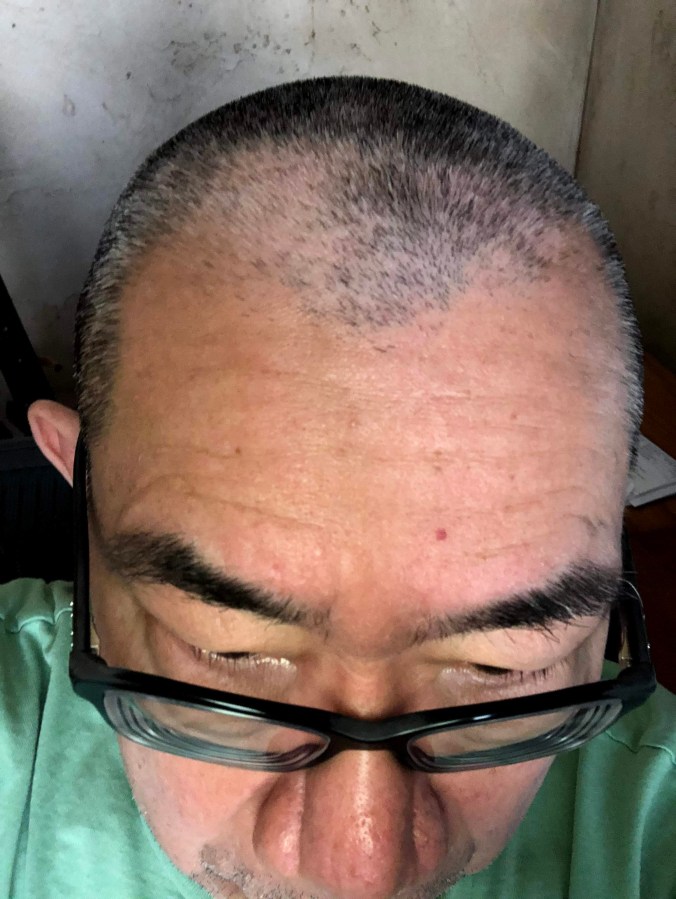
Getting longer…
04.12.20

04.05.20

Two weeks ago.
 lifeunderwriter.net
You must be logged in to post a comment.