Substantial coronavirus spread seen before symptoms show up — Science Chronicle

A study published in Nature Medicine found that people infected with novel coronavirus (SARS-CoV-2) start shedding the virus two-three days before symptoms show up. Studying 77 pairs of injector-infected pairs, the researchers estimate that 44% of secondary infected people can spread the virus even before symptoms show up. In a study published recently, researchers […]

Since the proportion of pre-symptomatic transmission is substantial, maintaining hand hygiene and social distancing can play an important role in containing virus spread in the community.

via Substantial coronavirus spread seen before symptoms show up — Science Chronicle

Unusual Presentations of COVID-19

“Even in a bad flu season, you never see something like this; it’s just unheard of,” said Harlan Krumholz, MD, a Yale cardiologist…”When they get to the ICU, we are seeing lots of people with acute kidney injuries; lots of people developing endocrine problems; people having blood sugar control issues, coagulation issues, blood clots. We are just waking up to the wide range of ways this virus can affect people. Our ignorance is profound,” but physicians “recognize that this thing has the capability of attacking almost every single organ system, and it may or may not present with respiratory symptoms.”

Read the entire Medscape article at Unusual Presentations of COVID-19

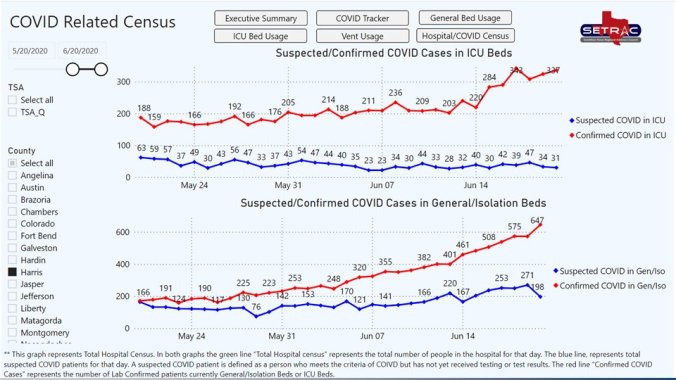
This shit is real and it is scary.

But hey, let’s go to the beach!

Floridamorons

Photo credit: as noted in the photo but stolen shamelessly from the Twitter feed #FloridaMorons


Meat Intake and Colorectal Polyps

Meat Intake and Colorectal Polyps

Research professor of medicine Martha Shrubsole, Ph.D., and colleagues at Vanderbilt University Medical Center have published the first study to evaluate intakes of meat, cooking methods and meat mutagens and risk of developing sessile serrated polyps (SSPs, also called sessile serrated lesions). Shrubsole previously reported that consuming high levels of red meat increased the risk of developing all types of polyps, but that the likelihood of developing SSPs was two times greater than the risk of developing adenomas and hyperplastic polyps (HP).

Conventional colorectal adenomas are the precursor lesions for most colorectal cancers. SSPs, however, represent an alternative pathway to carcinogenesis that may account for up to 35 percent of colorectal cancers. Because a diagnostic consensus for SSPs was not reached until 2010, few epidemiologic studies have evaluated risk factors.


Any Polyp Type Raises CRC Risk

A finding of any type of polyp in the colon increases the risk for colorectal cancer (CRC), according to new findings from a large Swedish study.

At 10 years, the cumulative colorectal cancer incidence was 1.6% among patients with hyperplastic polyps, 2.5% among those with sessile serrated polyps, 2.7% for tubular adenomas, 5.1% for tubulovillous adenomas, and 8.6% for villous adenomas, as compared with 2.1% for the control group.

However, a higher risk for colorectal-related death was only observed in patients with sessile serrated polyps, tubulovillous adenomas, or villous adenomas.

The study was published online March 16 in Lancet Gastroenterology & Hepatology.

Any Type of Polyp Increases the Risk for Colorectal Cancer

Boldface sections are mine.

I had my first virtual visit with my physician yesterday.  I mentioned that I was postponing my colonoscopy this year for pandemic reasons.  She said that’s fine, don’t worry about it.  I read this article today.  Now I know why I’m on a three year callback.


Covid-19 Buzz Cut – Day One – 03.29.20

I am back in my home office learning and sharing about shelter in place.  Yesterday my son helped me cut my hair.  He’s been cutting his own hair since medical school.  As the doctor inspected my work he said,

“You missed a few spots.”

So he finished up what I started.

Today I researched “essential” businesses.

Barbershops are not considered “essential”

I expected this hence the shelter in place buzz cut.

Yes, it’s real short.  Top view.

img_1939

Backside view.

img_1924