How To Reduce Your Risk of Developing Diabetes

The researchers, from 23 universities in Spain and Harvard Chan School, split 4,746 PREDIMED-Plus participants into an intervention group and a control group and followed their health outcomes for six years. The intervention group adhered to a Mediterranean diet; reduced their caloric intake by about 600 calories per day; engaged in moderate physical activity, such as brisk walking and strength and balance exercises; and received professional support for weight loss control. The control group adhered to a Mediterranean diet without calorie restriction, exercise guidance, or professional support. Participants ranged from age 55 to 75, were overweight or obese, and had metabolic syndrome, but were free of T2D at baseline.

The study found that those in the intervention group had a 31% lower risk of developing T2D compared to those in the control group. Additionally, the intervention group lost an average of 3.3 kilograms and reduced their waist circumference by 3.6 centimeters, compared to 0.6 kilograms and 0.3 centimeters in the control group. Scientists found 3 simple tweaks that cut diabetes risk by 31%https://www.sciencedaily.com/releases/2025/08/250829022835.htm Harvard T.H. Chan School of Public Health. ScienceDaily. http://www.sciencedaily.com/releases/2025/08/250829022835.htm (accessed August 29, 2025).

Guess I’ll cut out beer.

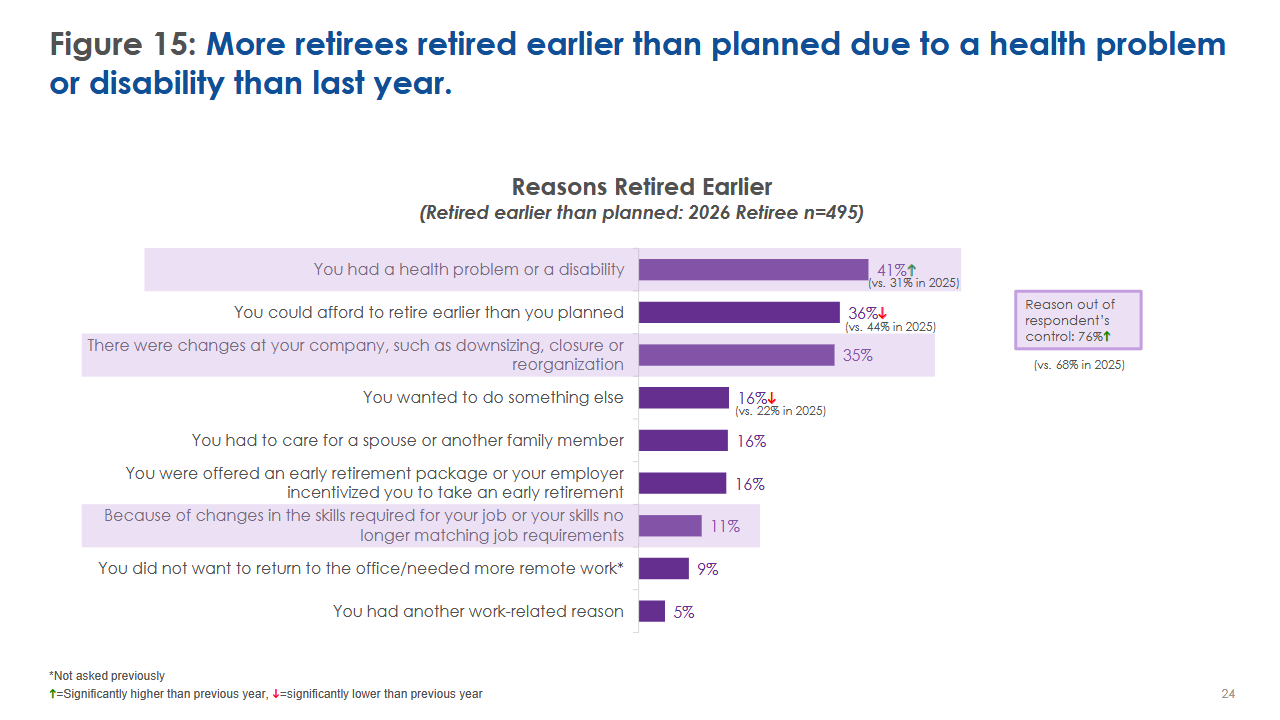
Random Thoughts on Retirement and Longevity – Can Remote Work Delay Retirement?

The mortality impact is interesting

The Journal of Epidemiology and Community Health found that those who worked just a year beyond retirement age had a 9% to 11% lower risk of dying during the 18 years the research covered, regardless of health. Could Remote Work Delay Your Retirement? https://www.kiplinger.com/retirement/retirement-planning/could-remote-work-delay-your-retirement

If you only eat “superfoods” will you have a long life?

“There is no single secret to living a long, healthy life.” Salvatore Di Somma, MD. Sanford Burnham Prebys. “A long and ongoing look at the secrets of human longevity and healthy aging.” ScienceDaily – https://www.sciencedaily.com/releases/2025/05/250505171023.htm

Coffee

All coffee types decrease the risk of adverse clinical outcomes in chronic liver disease: a UK Biobank study

Kennedy, O.J., Fallowfield, J.A., Poole, R. et al. BMC Public Health 21, 970 (2021) – https://bmcpublichealth.biomedcentral.com/articles/10.1186/s12889-021-10991

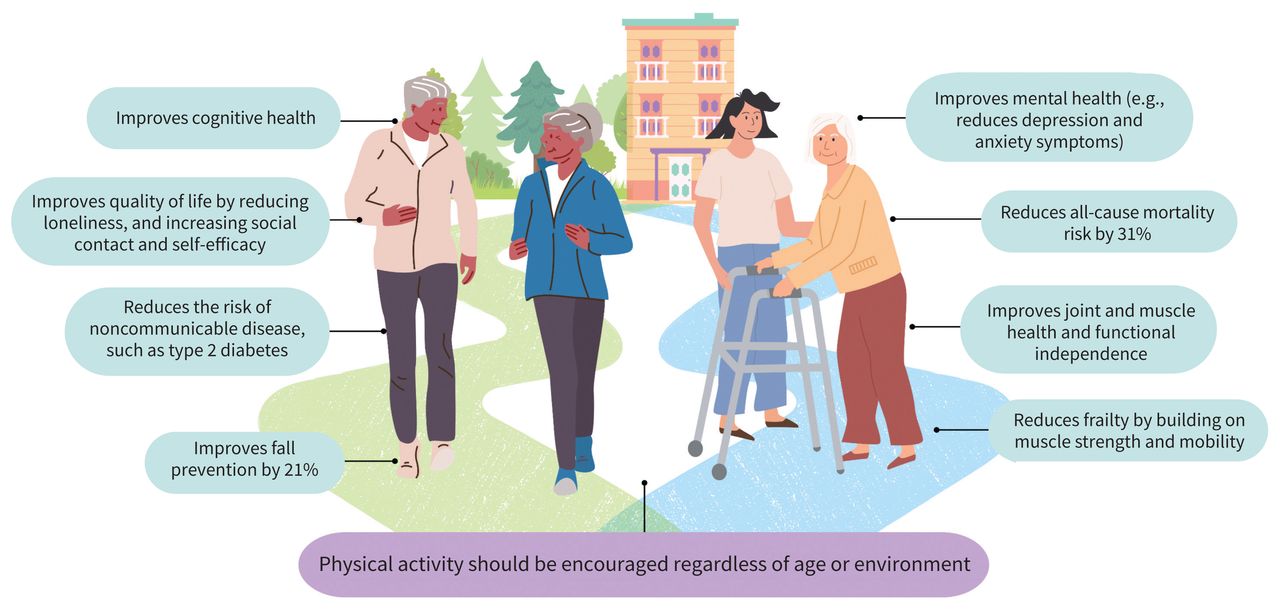
Movement is medicine

Being consistently physically active in adulthood is linked to a 30–40% lower risk of death from any cause in later life, while upping levels from below those recommended for health is still associated with a 20–25% lower risk, finds a pooled data analysis of the available evidence, published online in the British Journal of Sports Medicine. It’s never too late: Just moving more could add years to your lifehttps://www.sciencedaily.com/releases/2025/07/250711224321.htm

Whiskey

University of California neurologist Claudia Kawas and her team have been studying the lifestyle habits of people who live until their 90s. The group has been researching people of this age group for some 15 years – and they have found that those who drank two units of alcohol every day were less likely to die prematurely.“I have no explanation for it, but I do firmly believe that modest drinking improves longevity,” Kawas said. – Whiskey makes you live a longer, healthier lifehttps://www.irishcentral.com/culture/food-drink/whiskey-live-longer-healthier

Loneliness

Now, however, new research is calling into question this long-held belief and, surprisingly, found that loneliness may not be quite the threat that we all once thought it was. In fact, the problem may be one of confusing cause and effect. The Surprising Truth About Loneliness and Longevityhttps://www.kiplinger.com/retirement/the-surprising-truth-about-loneliness-and-longevity

Loneliness is pervasive in home care settings across the 3 countries; however, its association with mortality differs from reports for the general population. Loneliness was not associated with an increased risk of death after adjusting for health-related covariates. The causal order between changes in health, loneliness, and mortality is unclear. For example, loneliness may be a consequence of those health changes rather than their cause. Cross-National Evidence on Risk of Death Associated with Loneliness: A Survival Analysis of 1-Year All-Cause Mortality among Older Adult Home Care Recipients in Canada, Finland, and Aotearoa | New Zealandhttps://www.sciencedirect.com/science/article/pii/S152586102500204X

I’ve Been in Physical Therapy For Over Three Months

Less is more.

We’ve turned the idea of “exercise” into something so loaded these days, only to be validated by a specific kind of intensity. Just uttering the word exercise now can ignite an all-or-nothing mindset, filled with protein obsessions, endless wearable fitness trackers, or even a costly membership to an elite wellness club. I Won’t Be Shamed — Physical Therapy Is Still Exercisehttps://www.popsugar.com/fitness/physical-therapy-still-a-workout-49448831

I used to be a runner. Quite a few years ago my knees told me not to run anymore.

I joined the Y and did the elliptical and treadmills until my knees complained some more. I moved my exercise routine to the resistance machines. Then Covid hit, I cancelled my membership and the months turned into years away from the gym.

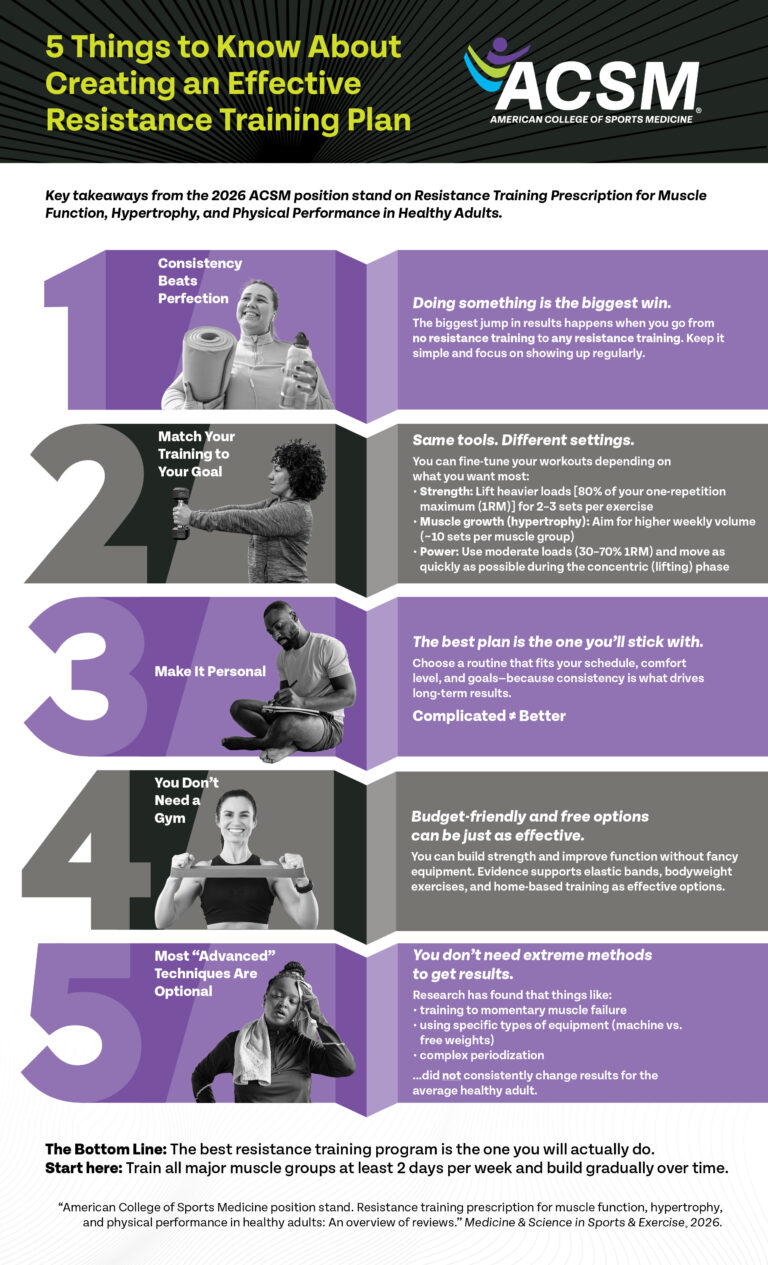
I found some resistance bands in the house and started some simple exercises at home. I rejoined the Y and started back with the resistance machines.

Earlier this year my employer offered access to online virtual physical therapy. I took advantage of this benefit from https://www.hingehealth.com/ and have been in physical therapy now for over three months. Less pain (especially my cervical spine, the result of a near fatal encounter with a car), less stiffness, better flexibility, and gradually improving strength. The beauty of the program is availability on demand and it is 100% HEP (home exercise program). Sessions are 10-12 minutes long and you don’t have to leave the house.

Less is more.

I’m Taking Your Phone Away (and you didn’t do anything wrong)

The study found that those who had high and increasing addiction to mobile phones and social media platforms were at a higher risk of suicidal behaviors and thoughts. At year four, almost 18% of kids reported having suicidal thoughts, and 5% said they had suicidal behaviors. Teens with ‘addictive’ phone use more likely to be suicidal: Studyhttps://thehill.com/policy/healthcare/5360042-teens-addiction-social-media-phones-suicidal-thoughts/

Here’s the link to the JAMA article https://jamanetwork.com/journals/jama/article-abstract/2835481/

Yikes!

When People Did Not Have Access to Mobile Internet, they Spent More Time Socializing in Person, Exercising, and Being in Nature.

https://www.harmonyhit.com/phone-screen-time-statistics/

Our results provide evidence that blocking mobile internet from smartphones for 2 weeks can produce significant improvements for SWB (subjective well being), mental health, and the objectively measured ability to sustain attention. Even those who did not fully comply with the intervention experienced significant, though more modest, improvements. These findings suggest that constant connection to the online world comes at a cost, since psychological functioning improves when this connection is reduced. Blocking mobile internet on smartphones improves sustained attention, mental health, and subjective well-being PNAS Nexus, Volume 4, Issue 2, February 2025, pgaf017, https://doi.org/10.1093/pnasnexus/pgaf017

Excuse me please, I have to check my phone.

Diet and Healthy Aging

In the journal Nature Medicine this week there was an important open-access publication about a large combined cohort of over 105,000 health professionals prospectively followed for 30 years. Only 9.3% reached the age of 70 years with “healthy aging” —without 11 major chronic diseases and no impairment of cognitive or physical function or mental health. Our Diet and Healthy Aging Eric Topol, MD – https://erictopol.substack.com/p/our-diet-and-healthy-aging

Dr. Eric Topol’s assessment of this study is well balanced and thoughtfully written. His bio is here: https://www.scripps.edu/faculty/topol/

Healthy aging in this study is described as reaching age 70 without developing any of 11 major diseases: cancer (except for non-melanoma skin cancers), diabetes, heart attack, coronary artery disease, congestive heart failure, stroke, kidney failure, chronic obstructive pulmonary disease, Parkinson disease, multiple sclerosis and amyotrophic lateral sclerosis.

My Half-Birthday is coming up soon. I’ll be 70.5 years young. The biggest take home lesson for me is this:

Beer is better for you than pizza.

Ah, Houston, we’ve had a problem (Scary Charts 03.10.25)

Source – https://www.apolloacademy.com/there-is-a-significant-need-for-retirement-savings-in-the-us/

Short of forcing people to save for retirement, Social Security remains the safety net for those who lack access to retirement vehicles or don’t have the means to save. – How Many Americans Don’t Save For Retirement? https://awealthofcommonsense.com/2025/03/how-many-americans-dont-save-for-retirement/

TBH, Social Security is a much higher portion of our retirement income than I had planned for.

Men Are Bad at Retirement

When envisioning retirement, many men imagine traveling, playing with grandchildren and driving that sexy convertible they can finally afford. The reality? For those over 70, 94% of adults watch television every day, with nearly 10% spending more than nine hours a day staring at the shows.

Men die earlier, with an average life expectancy of 73.5 years, according to a 2021 study. That’s about five years earlier than women in the U.S. One study found that men who considered themselves “traditional” men — unemotional and self-reliant — were more likely to ignore medical problems, and suffered worse health outcomes than women. And the problem gets worse as they get older. About 74% of men 55 and older go to the doctor for an annual check-up, compared to 43% of men age 35-54 and 26% of men age 18-34. Why So Many Men are Bad at Retirement https://getpocket.com/explore/item/why-so-many-men-are-bad-at-retirement?

This is an interesting article. Just more reasons why I’m not retired.

Retire. Watch TV all day long. Repeat.

Yikes.