The researchers first isolated antibodies that could bind to the receptor binding domain (RBD), a crucial region on the virus’s spike protein. They then tested whether the antibodies could neutralize SARS-CoV-2—that is, bind to the virus and stop infection.
Most participants had low or very low levels of antibodies against SARS-CoV-2. Only 1% of the study participants had high levels of antibodies that could neutralize the virus.
With approximately 1000 cases of MIS-C (including, here and below, those that have been classified as PIMS-TS) reported worldwide, do we now have a clear picture of the new disorder, or, as in the story of the blind men and the elephant, has only part of the beast been described? What are its cause and pathogenesis? How should it be diagnosed and treated, and are there wider implications for our understanding of Covid-19?
A dear reader in Florida asked the question of what changes may be forthcoming in consumer behavior as a result of Covid-19. To be honest a question like this is nearly impossible to answer at this point in the history of the pandemic. As I read more articles and ponder the question I come to realize many others are trying to answer the same question. So I’ll begin at the beginning by expanding on the vague comments I made in my post Less Worried About Tulsa (for now). In no particular order the following are my expanded thoughts on what I perceive to be permanent changes in consumer behavior.
Our food supply chain issues are far from over. Meat and dairy consumption will decline and retail prices will increase. The primary reason for the decline in consumption will be the millions of unemployed who can no longer afford to eat meat.
The juxtaposition of images in the news of farmers destroying crops and dumping milk with empty supermarket shelves or hungry Americans lining up for hours at food banks tells a story of economic efficiency gone mad. Today the US actually has two separate food chains, each supplying roughly half of the market. The retail food chain links one set of farmers to grocery stores, and a second chain links a different set of farmers to institutional purchasers of food, such as restaurants, schools, and corporate offices. With the shutting down of much of the economy, as Americans stay home, this second food chain has essentially collapsed. But because of the way the industry has developed over the past several decades, it’s virtually impossible to reroute food normally sold in bulk to institutions to the retail outlets now clamoring for it. There’s still plenty of food coming from American farms, but no easy way to get it where it’s needed.
Online education will become the standard operating model for higher education. Thousands of colleges and universities will go belly up. Professor Galloway at NYU says it’s simple math.
The math here is simple, and similar to any product where the consumer is constantly weighing her options and deciding where to spend her money. The value proposition of college is:
C = Certification (the lane you are put in post graduation based on the brand/school you attended, i.e., a caste system) E = Education (learning and stuff) Ex = Experience (fall leaves, football games, getting your heart broken, throwing up)
Schools charging $50,000/year or more (Brown, NYU) have value propositions that have been rendered untenable overnight. The elimination of the university experience is similar to SeaWorld without killer whales. Yeah, we get it … free Willy, but I’m not paying $450 to see otters and penguins. Also, we’re not paying $54,000 for Zoom classes.
The killer whales (cash cows) of high-tuition prestige universities are international students. We claim we let them in for diversity. This is bullshit. International students are the least diverse cohort on earth. They are all rich kids who pay full tuition, get jobs at multinational corporations, and often return to the family business. At NYU, they constitute 27% of our student body and likely half our cash flow, as they are ineligible for financial aid. We have a pandemic coupled with an administration committed to the demonization of foreigners, including severely limiting the prospects of highly skilled grad students. This means the whales may just not show up this fall, leaving us with otters and penguins — an enormous fiscal hole.
I’ve been working from home since 2006. Way back when I was the oddball. Now almost everyone is WFH. People are looking to leave the large cities. This migration trend will grow over the next few years.
The real estate brokerage Redfin reports that its data of more than 1 million house hunters shows a record 27% of home searchers at its site looking to move to another metro area in April and May.
Homes in smaller towns are seeing an uptick in listing views. Redfin notes that page views of homes for sale in towns with fewer than 50,000 residents saw traffic rise 87% year over year in May. That is nearly four times the 22% yearly increase in page views of homes in cities with more than 1 million residents.
The younger generations will change their behaviors more slowly than older age cohorts. But as more and more younger people get infected and they themselves develop symptoms and/or know someone who has contracted Covid-19 behaviors will start to change quickly.
In a Twitter thread, University of Florida bio-statistics professor Dr. Natalie Dean offers three possible explanations for why the median age of cases might be falling, and what data signals we should look for.
If it’s simply a matter of more testing, hospitalizations should not increase, and test positivity should decline or hold steady. In the South and West, positivity rates appear to be rising, but regional numbers can mask very different state trends. In Texas, Florida, and Arizona, test positivity and cases are both rising; in California, by contrast, new cases are way up but the positivity rate has remained at five percent in June, and in Georgia the positivity rate is up just two percentage points while testing is up.
If “elderly people are more cautious,” then cases, test positivity, and hospitalizations should decline.In the Northeast, tests are way up, positivity is way down, and new cases are flat. In New Jersey, new daily cases are down to 10% of April peaks, and hospitalizations have dropped precipitously. New daily cases in Connecticut have been in the double digits for the past couple weeks, and hospitalizations are down to 124 as of June 23 from over a thousand in mid-May.
If younger people are less cautious—or if they’re more exposed as young service workers return to their jobs—cases, test positivity, and hospitalizations should rise. This is happening in Texas and Arizona. Cases and test positivity are up in Florida; statewide hospital data was only available for a few days in May before the state removed it from public view, but in Miami-Dade County, hospitalizations increased from 601 to 776 from June 9 to June 22.
Look at the percentage of Asians with Covid-19. Asians in Tulsa Oklahoma?
From a Gofundme.com webpage:
Dim Mang is organizing this fundraiser.
Created June 12, 2020 — Community & Neighbors
The Burmese American community in Tulsa is one of the largest in the United States, totaling about 8,000 members. We are a community of immigrants and refugees; the majority of the community are Chin, also known as Zomi, a (Christian) religious and ethnic minority group from Chin State in Myanmar.
The community is at the front lines of COVID-19, with outbreaks occurring across multiple factories in Tulsa due to the state’s passive response and these companies’ unsafe working standards. In order to aid the Zomi community in Tulsa, we (a group of college students and recently graduated college students) are raising money to put together packages of gloves, masks, and translated CDC guidelines in Zomi language, which is the language the majority of the community speaks.
A Whirlpool Corporation plant in Tulsa was closed after health officials confirmed cases of COVID-19, a deadly and highly infectious disease, associated with the facility.
This virus is doing more than merely infecting people, causing extreme illness and death. This virus is a teacher.
We are learning who and what in our society is truly essential.
We are learning more about supply chains and their inherent weak links.
We are learning there are those among us who care about others and those of us who are boundlessly selfish.
We are learning the oft touted service economy is not only a myth but that a majority of the services provided in a service economy are not essential.
We are learning the “higher” in higher education is the cost and debt, not necessarily the quality of the product.
We are learning we all need to eat but not eat out.
As of Jan. 22, there have been at least 45,000 reported positive cases tied to meat and poultry processing facilities from at least 482 outbreaks in 38 states, and at least 240 reported worker deaths in at least 62 plants in 27 states.
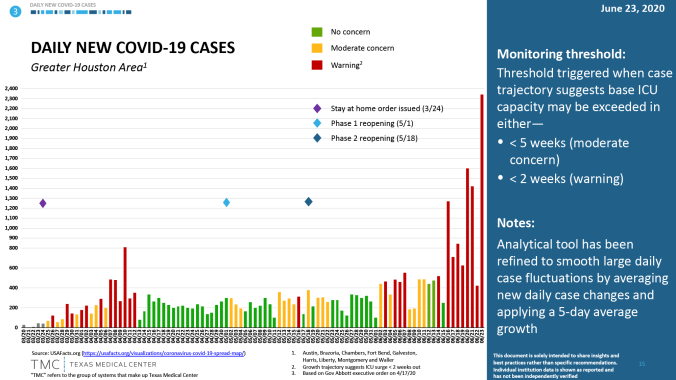
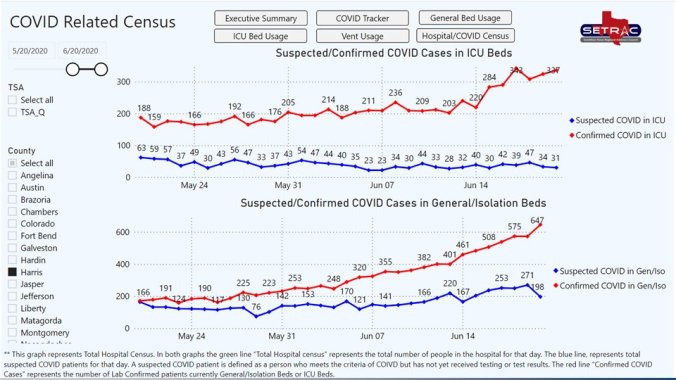
On June 26th, Harris County Judge Lina Hidalgo raised the Current Level of Risk for Harris County from Level 2 to Level 1.
Level 1 signifies a severe and uncontrolled level of COVID-19 in Harris County, meaning outbreaks are present and worsening and that testing and contact tracing capacity is strained or exceeded. At this level, residents take action to minimize contacts with others wherever possible and avoid leaving home except for the most essential needs like going to the grocery store for food and medicine.
Regardless of current level indicated, all residents should continue the use of social distancing, frequent hand washing, and the use of face coverings until there is a vaccine or a treatment for the virus. Additionally, residents exposed to COVID-19 should quarantine for 14 days regardless of level indicated.
My vegetarian cookbook collection is growing. Grocery trips will include more shelf stable items so that I’ll be able to fix more meat-free meals in the near future.
The acquisition of more cookbooks is a rational strategy. I’ll need more sources besides the same recipe that shows up multiple times on multiple websites as the best (fill in the blank) for inspiration in the kitchen when the POTUS issues an Executive Order rationing animal proteins.
Roughly two in five Americans (38%) say the COVID-19 pandemic has impacted their retirement plans by having to retire later than planned, now not being able to retire at all or being forced into retirement. Plus, 41% are currently reevaluating their retirement plans to assess the financial impact of COVID-19. These are among the findings revealed by a new COVID-19 Tax Survey conducted online in May 2020 by The Harris Poll on behalf of The Nationwide Retirement Institute® among U.S. adults 18+. Heightened uncertainty and complexity are driving a need for greater financial protection. Roughly half of Americans agree that the COVID-19 pandemic has made them recognize the need for annuities to protect their investments against market risk (47%) and to protect their retirement income (48%). More than half of all U.S. adults (57%) and investors (60%) also say the pandemic has made them recognize the need for life insurance.
More survey results can be found in the full article at the link above.
The heightened uncertainty and complexity have definitely affected my own retirement plans.
The massive number of people out of work have definitely affected my own thoughts and feelings about work.
Retirement = work.
As long as my health holds up and as long as there’s someone out there willing to pay me to do what I do I plan on working.
It is unknown how the virus made it onto the chopping board at Xinfadi market in Beijing’s Fentai district, but the discovery came in conjunction with a cluster of cases and has forced its closure.
Lin Li, chief scientist of a team that monitors aquatic disease and control in Guangdong Province, told the newspaper it’s not possible for live salmon to be contaminated with the virus given it lives in the ocean, neither can frozen salmon be a source of the novel coronavirus which can only exist in active cells.
By now anyone who stops by this blog knows I’m obsessed with Covid-19 and try to learn as much as I can by reading widely. When I heard about the potential salmon connection I had to find more to read. And I did.
I like salmon and usually buy the farmed version over the wild version despite the nutritional differences. When I was on the company’s website I found this link:
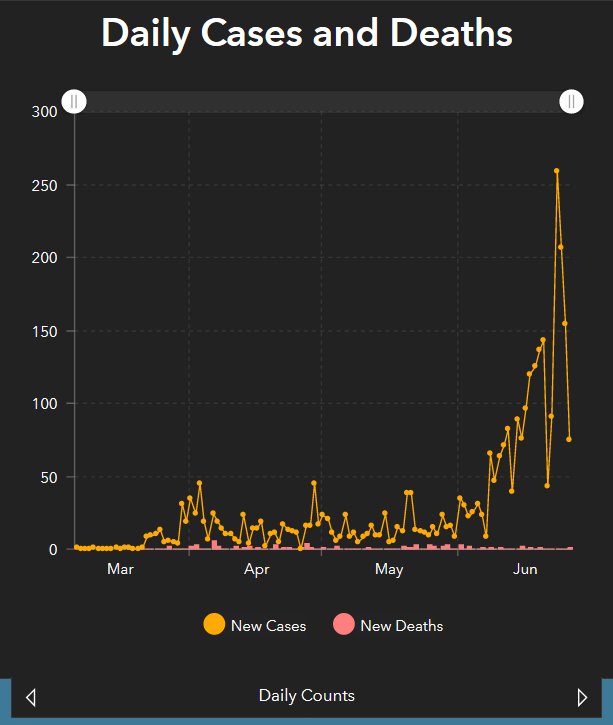
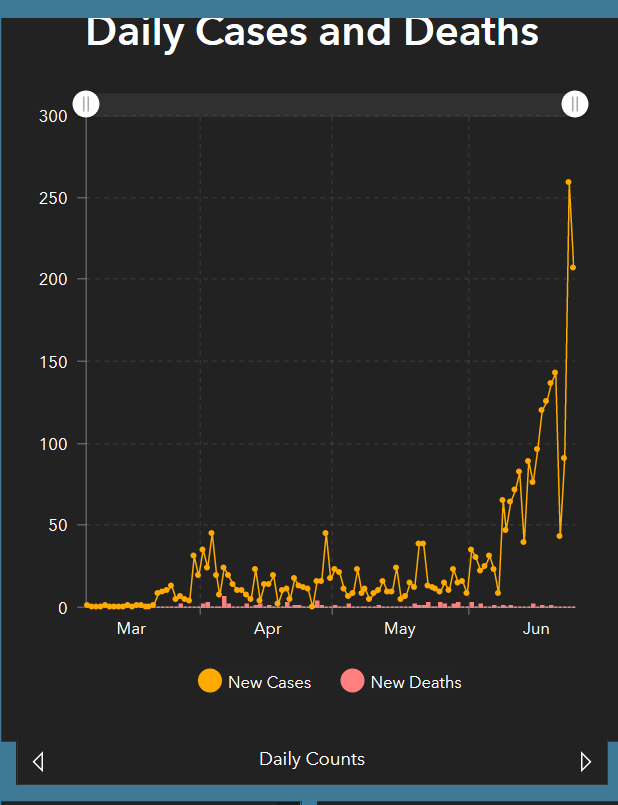
Dr. Peter Hotez, dean of the National School of Tropical Medicine at Baylor College of Medicine, predicted over the weekend that Houston is on the brink of a disaster, based on the latest trends in increasing numbers. “My observations if this trajectory persists: 1) Houston would become the worst affected city in the US, maybe rival what we’re seeing now in Brazil 2) The masks = good 1st step but simply won’t be enough 3) We would need to proceed to red alert,” Hotez tweeted.
Do not wait for a politician to tell you to:
Wear a mask.
Avoid crowds (especially younger non-mask wearing crowds where infections are spiking upwards).
Pay attention to your local Covid-19 statistics and act accordingly. Limit your excursions to trips for essentials or shelter in place.







 lifeunderwriter.net
You must be logged in to post a comment.