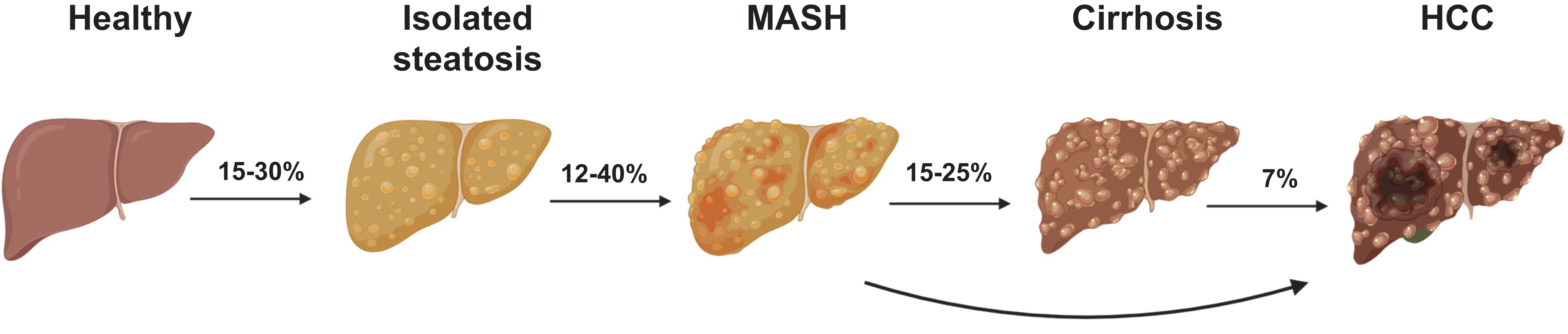
Worldwide, MASLD became the most common chronic liver disease, affecting up to 38% of the adult population (11). In addition, the global prevalence of MASLD is expected to further increase during the next two decades (12). For example, in the U.S., the prevalence of MASLD is predicted to increase from 34% (86 million people) in 2020 to 41% (122 million people) by 2050 (13). MASLD is an increasingly important contributor not only to liver-related but also to extrahepatic morbidity and mortality worldwide. This observation supports that the clinical burden of MASLD clearly extends far beyond the liver, making it a multisystem disorder. While among people with MASLD <10% develop liver-related complications, the major causes of death are CVD and cancer (11,14).
Today, the highest global pooled prevalence of MASLD is found among people with obesity (75% [95% CI 71–79]) (15) and type 2 diabetes (65% [61–68]) (16). Among people with obesity (34% [28–39]) and people with diabetes (32% [17–51]) there is also a very high prevalence of the advanced form of MASLD, metabolic dysfunction–associated steatohepatitis (MASH) (15,16). Furthermore, at 37% (95% CI 26–48), the prevalence of MASLD is also very high among children and adolescents with type 2 diabetes (17). This very early onset of MASLD may have severe long-term consequences for the liver, such as higher risk for cirrhosis and hepatocellular carcinoma (HCC). In addition, among adults with prediabetes prevalence of MASLD is approximately twofold higher in comparison with people with normal glucose regulation, independently of adiposity (18). The findings that overweight and hyperglycemia are tightly related to MASLD indicate that there are joint pathomechanisms promoting adiposity, hyperglycemia, and MASLD. Furthermore, hyperglycemia may promote hepatic steatosis and inflammation, and the steatotic and inflamed liver may also be involved in the pathogenesis of type 2 diabetes. Thus, there may be a vicious cycle between increased liver fat content and insulin resistance–associated hyperglycemia promoting the progression of both diseases.
Norbert Stefan; MASLD as Complication of Diabetes. Diabetes 20 July 2026; 75 (8): 1359–1370. https://doi.org/10.2337/dbi26-0001
The US Health and Human Services (HHS) and Department of Agriculture (USDA) issued new alcohol guidelines in January 2026 “Consume less alcohol for better overall health” and I take advice from my government seriously.

